Compare Schneider Electric PLC vs Siemens PLC for performance, programming, motion control, networking, safety, and industrial automation applications.
Schneider Electric PLC vs Siemens PLC: Which Industrial Controller Is Better?
If you are choosing between a Schneider Electric PLC and a Siemens PLC, the right answer is not simply that one brand is better than the other. Siemens generally has the stronger overall ecosystem for machine automation, motion, diagnostics, and integrated engineering through TIA Portal, while Schneider Electric is particularly compelling for process automation, infrastructure, Ethernet-based architectures, Modicon modernization, and applications built around the EcoStruxure ecosystem. The best controller depends on your plant architecture, existing installed base, engineering skills, communication requirements, safety strategy, lifecycle expectations, and total cost of ownership.
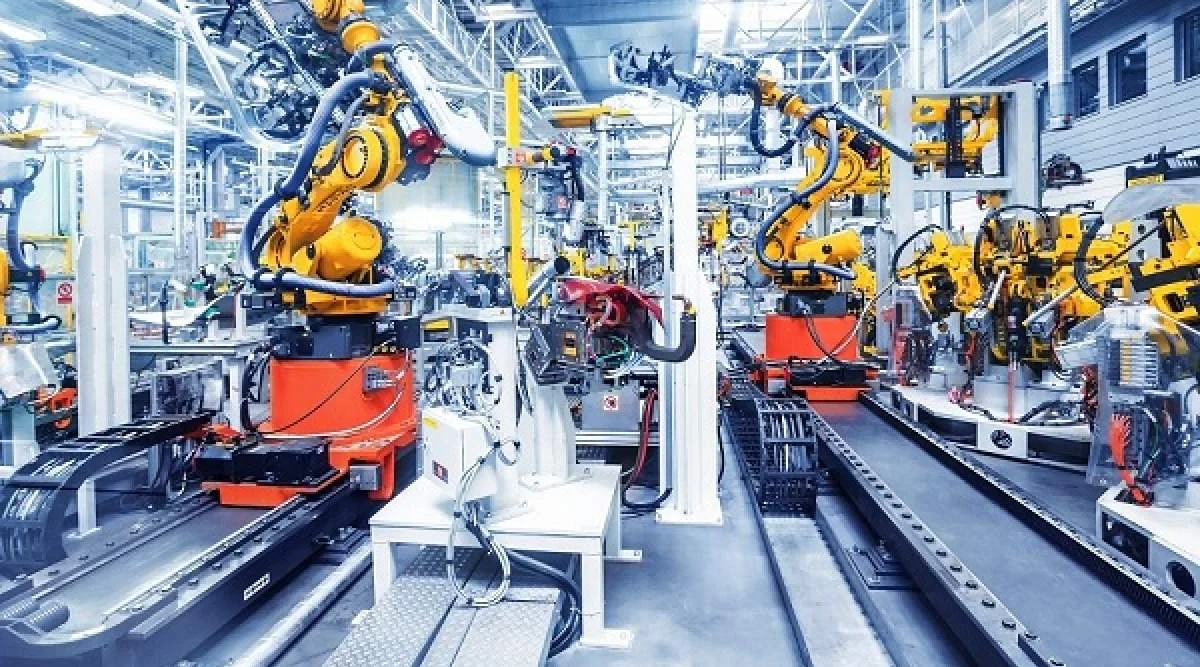
For a serious comparison, the two platforms worth putting head-to-head are primarily the Schneider Electric Modicon M580 and Siemens SIMATIC S7-1500. Both are sophisticated industrial controllers capable of handling demanding automation applications, but they approach engineering, networking, I/O architecture, redundancy, motion, safety, and system integration somewhat differently. Schneider Electric Modicon M580 PLC compared with Siemens SIMATIC S7-1500 PLC in an industrial control environment
Schneider Electric PLC vs Siemens PLC: The Short Answer
There is no universal winner. If your project is primarily a machine-building, discrete manufacturing, motion-control, or highly integrated Siemens environment, the S7-1500 is often the stronger choice because Siemens has built a remarkably cohesive engineering ecosystem around TIA Portal, SIMATIC controllers, distributed I/O, HMI, drives, safety, and motion.
Schneider Electric becomes particularly attractive when the project is centered on process automation, infrastructure, high availability, Modbus TCP/EtherNet/IP connectivity, existing Modicon installations, or an EcoStruxure architecture. The Modicon M580, for example, provides native Ethernet, redundancy options, safety controllers, cybersecurity capabilities, and support for a broad range of industrial protocols.
Therefore, the question should not be, “Which PLC has the better specifications?” The better engineering question is, “Which controller creates the lowest technical and lifecycle risk for this particular plant?”
That distinction matters because a PLC is not an isolated box. It becomes the center of an automation ecosystem that can remain in service for 10, 15, or even 20 years.
Schneider Electric PLC vs Siemens PLC: Understanding the Product Families
Before comparing the brands, it is important to avoid comparing products from completely different performance classes.
Schneider Electric has a broad Modicon portfolio that includes compact and modular controllers as well as higher-end PAC platforms. Depending on the application, engineers may consider controllers such as the Modicon M221, M241, M340, and M580. Schneider also has newer software-defined automation approaches within its EcoStruxure portfolio. (Schneider Electric)
Siemens similarly offers a scalable SIMATIC controller family. Compact applications can use controllers such as the S7-1200, while more demanding machine and plant applications often move into the S7-1500 family. Siemens also offers technology CPUs, fail-safe controllers, distributed controllers, and software controllers. (Siemens)
Consequently, this article concentrates on the Modicon M580 versus SIMATIC S7-1500 because these platforms provide a meaningful comparison for medium-to-high complexity industrial applications.
For smaller machines, the comparison may instead be between a Modicon M221/M241 and a Siemens S7-1200. In that situation, the selection criteria and economics can change considerably.
For engineers and procurement teams evaluating actual hardware, Automation Pioneer maintains dedicated product categories for both Schneider PLC systems and Siemens PLC systems.
Schneider Electric Modicon M580 vs Siemens SIMATIC S7-1500
Controller Architecture and Scalability
The Modicon M580 is positioned as a high-end PAC platform rather than simply a basic PLC. Schneider designed it around Ethernet-based architectures and the X80 I/O platform. The M580 supports standard and safety applications, redundant configurations, and distributed architectures. Schneider also emphasizes native Ethernet, cybersecurity, and high availability as central characteristics of the platform. (Schneider Electric)
The S7-1500 takes a similarly modular approach. Siemens offers multiple CPU performance classes, signal modules, technology modules, communication modules, distributed configurations, fail-safe variants, and specialized technology CPUs. Siemens positions the S7-1500 for advanced automation tasks ranging from conventional machine control to more complex plant applications. (Siemens)
In practical engineering terms, neither platform is inherently too small or too large for a serious industrial project. The important difference is how the controller fits into the surrounding architecture.
If you already have Modicon X80 infrastructure, Schneider’s architecture can make expansion and modernization significantly easier. Likewise, if a plant is standardized around SIMATIC, ET 200 distributed I/O, SINAMICS drives, and TIA Portal, an S7-1500 project generally benefits from staying within that ecosystem.
Programming Software: EcoStruxure Control Expert vs TIA Portal
This is one of the most important differences between the two platforms.
Schneider Electric uses EcoStruxure Control Expert for a range of Modicon PACs, including the M340 and M580 families. The platform supports IEC 61131-3 programming languages including Ladder Diagram, Function Block Diagram, Sequential Function Chart, and Structured Text. Schneider also provides tools for debugging, simulation, diagnostics, libraries, and modernization.
Siemens uses STEP 7 within TIA Portal for S7-1200 and S7-1500 engineering. TIA Portal brings controller configuration, programming, distributed I/O, motion, safety, diagnostics, and HMI engineering into a unified environment. Siemens specifically emphasizes integrated engineering and diagnostics as major advantages of the platform.
From an engineer’s perspective, TIA Portal has a major advantage when a project uses a broad Siemens automation stack. You can configure the PLC, distributed I/O, HMI, safety functions, and motion-related components within one engineering environment.
That does not make Control Expert inferior. It means Schneider takes a different approach. Control Expert is mature and capable, particularly for Modicon PAC applications, and Schneider’s broader EcoStruxure portfolio provides additional tools for modern automation architectures.
The deciding factor should therefore be your engineering environment, not which software interface looks better in a demonstration.
Schneider vs Siemens PLC Performance and Processing
Raw processor speed is one of the easiest specifications to compare and one of the easiest to misuse.
Modern PLC performance should be evaluated against the actual control problem. A high-speed CPU is valuable when the application requires fast logic execution, large data processing, motion coordination, extensive communications, or complex control algorithms. However, processor performance alone does not determine the response time of an entire automation system.
The S7-1500 is designed as a high-performance controller family with scalable CPU classes. Siemens integrates diagnostics, motion functionality, security features, and communication capabilities into the platform. The company also offers technology CPUs for more demanding motion-control applications.
The M580 is similarly designed for demanding plant and process applications. Schneider emphasizes high availability, native Ethernet, distributed I/O, redundancy, cybersecurity, and process-control capabilities.
So which is faster?
The technically correct answer is it depends on the exact CPU, firmware, program structure, I/O architecture, communications load, and application. It is not defensible to claim that every Siemens CPU is faster than every Schneider controller or vice versa.
For a project where scan time and deterministic response are critical, engineers should benchmark the specific CPU models against the actual application rather than relying on brand-level claims.
Networking and Industrial Communication
Industrial communication is where the architectural differences become especially important.
Schneider Electric’s M580 provides native Ethernet and supports protocols including Modbus TCP and EtherNet/IP, while Schneider also lists OPC UA, IEC 61850, DNP3, IEC 60870, PROFIBUS DP, CANopen, serial communications, and other connectivity options depending on the configuration.
This makes the M580 particularly interesting for plants containing a mixture of legacy equipment, process instrumentation, electrical systems, and third-party devices.
Siemens has built much of its modern automation architecture around PROFINET, while OPC UA provides an important mechanism for structured and secure communication beyond the traditional field level. Siemens describes OPC UA as a platform-independent communication standard for machine-to-machine and vertical connectivity, including connections toward SCADA, MES, ERP, and cloud environments.
For a Siemens-centric factory, PROFINET and TIA Portal create a highly cohesive architecture. For a plant with extensive Modbus TCP infrastructure or mixed-vendor equipment, Schneider’s openness can be a significant advantage.
This is why communication requirements should be defined before selecting the PLC. A controller that performs beautifully but requires a collection of gateways, protocol converters, and specialized interface modules can become the more expensive choice over the life of the project.
Motion Control: Which PLC Is Better?
For high-performance machine automation and coordinated motion, Siemens has a particularly strong proposition.
The S7-1500 family includes integrated motion-control capabilities, while S7-1500T technology CPUs provide more advanced functionality for applications involving gearing, camming, synchronization, and complex kinematics. Siemens also integrates these capabilities with its drive ecosystem.
That makes Siemens especially compelling for:
Packaging machinery
Robotics
Material handling
High-speed manufacturing
Coordinated servo applications
Precision machine tools
Schneider Electric also provides motion and machine-control capabilities across its automation portfolio, particularly when Modicon controllers are paired with Schneider’s broader machine automation and drive ecosystem.
However, if the primary reason for selecting a PLC is sophisticated synchronized motion, Siemens deserves serious consideration because the S7-1500/T-CPU architecture is specifically designed around advanced motion requirements.
The correct conclusion is not that Schneider cannot handle motion. It can. The point is that Siemens has made advanced motion a particularly visible strength of its current controller ecosystem.
Safety and High Availability
Safety and availability should be treated as separate engineering requirements.
Functional safety concerns whether the system can bring equipment to a safe state when hazardous conditions occur. High availability concerns whether the control system can continue operating when hardware or communication components fail.
Schneider’s M580 platform offers safety-controller options and supports redundant architectures. Schneider states that M580 Safety can achieve SIL3 certification and that the platform supports redundancy for CPUs, power supplies, communication networks, and other elements depending on configuration.
Siemens offers fail-safe S7-1500 controllers and integrated safety engineering through TIA Portal. Siemens also offers S7-1500 R/H CPUs for high-availability applications. These systems use synchronized controller architectures so a backup CPU can take over when the primary controller fails.
For a safety-critical application, however, the PLC brand should never be selected solely from a marketing comparison. The engineer must evaluate the complete safety architecture, including safety I/O, safety networks, safety devices, application logic, risk assessment, validation, and applicable standards.
For high-availability process applications, both vendors offer serious architectures. The better choice is usually the platform that integrates most naturally with the plant’s existing control, networking, instrumentation, and maintenance strategy.
Cybersecurity: Schneider Electric vs Siemens PLC
Industrial cybersecurity is no longer optional.
A modern PLC may connect to engineering workstations, HMIs, SCADA systems, historians, remote-access infrastructure, plant networks, and enterprise systems. That connectivity creates operational value, but it also expands the attack surface.
Schneider states that the M580 incorporates cybersecurity features including encrypted and digitally signed firmware and software, access-control mechanisms, secured communications, HTTPS, IPsec communications, security event traceability, and protected engineering connections.
Siemens similarly incorporates security functions into the S7-1500 family and emphasizes industrial cybersecurity as a lifecycle responsibility. Siemens also provides security mechanisms through its controller and TIA Portal ecosystem.
Neither brand eliminates cybersecurity risk.
That point is important. A secure PLC installed on a poorly segmented network is still part of an insecure industrial environment. Effective OT cybersecurity requires network segmentation, identity and access management, secure remote access, patch management, asset inventories, backups, vulnerability management, monitoring, and disciplined change control.
Therefore, the best PLC is the one that fits your organization’s cybersecurity architecture and maintenance capabilities—not simply the one with the longest security feature list.
Diagnostics and Maintenance
This is an area where modern Siemens controllers have a strong reputation.
S7-1500 systems provide integrated diagnostics and diagnostic information across system components, while TIA Portal gives engineers a unified environment for troubleshooting and maintenance. Siemens explicitly highlights diagnostics as part of its controller architecture.
Schneider’s M580 platform also places significant emphasis on diagnostics. Schneider describes native module diagnostics, device replacement capabilities, preventive maintenance functions, and engineering tools designed to simplify maintenance.
In practice, however, maintenance efficiency depends heavily on the quality of the engineering implementation.
A poorly structured PLC program will be difficult to troubleshoot regardless of brand. A well-designed application should use meaningful tag names, modular program structures, consistent alarm conventions, clear diagnostics, proper documentation, version control, and disciplined commissioning procedures.
The PLC provides the tools. The engineering team determines whether those tools translate into maintainability.
Total Cost of Ownership: Schneider vs Siemens PLC
Purchase price is only one component of PLC cost. A realistic lifecycle analysis should consider:
Hardware + software + engineering + commissioning + training + spare parts + maintenance + downtime + migration + cybersecurity + future expansion.
A lower-priced controller can become the more expensive option if the engineering team does not know the platform or if the system requires additional gateways and custom integration.
Likewise, a more expensive controller can produce a lower total cost when it reduces engineering hours, commissioning time, downtime, and maintenance effort.
This is where installed base becomes extremely important.
Suppose a manufacturing company already operates 20 Siemens-controlled machines and has a maintenance department trained on TIA Portal. Introducing Schneider PLCs into a new line might create additional training, spare-parts, software, and support requirements.
Conversely, if a water-treatment facility already operates a large Modicon installation, replacing that ecosystem with Siemens solely because the S7-1500 has attractive specifications could create unnecessary migration risk.
In other words, standardization has economic value.
Which PLC Is Better for Process Automation?
For process-oriented applications, Schneider Electric deserves particularly serious consideration. The Modicon M580 was designed for demanding process and infrastructure environments and supports redundancy, distributed architectures, extensive communication options, and safety configurations. Schneider also positions the M580 within EcoStruxure Plant and broader process automation architectures.
Typical applications can include:
That does not mean Siemens is unsuitable for process automation. Siemens has extensive process-control capabilities and a broad automation portfolio.
However, where the plant already has a strong Modicon footprint or depends heavily on Modbus, distributed I/O, and Schneider’s process-oriented architecture, the M580 can be the more logical engineering decision.
Which PLC Is Better for Machine Automation?
For machine builders, Siemens frequently has the edge. The combination of S7-1500 controllers, TIA Portal, PROFINET, distributed I/O, HMI, safety, and integrated motion provides a cohesive environment for complex machines. Siemens specifically positions S7-1500 and S7-1500T controllers for advanced automation and motion applications.
That architecture is particularly attractive when a machine includes:
Multiple servo axes
High-speed motion
Advanced HMI
Distributed I/O
Safety functions
Robotics
Drive integration
Complex diagnostics
Schneider remains a strong machine-automation option, especially for builders standardized on Modicon and EcoStruxure Machine Expert or related Schneider platforms. But if advanced coordinated motion and a unified engineering environment are the dominant requirements, Siemens deserves a very close look.
Schneider Electric PLC vs Siemens PLC for Existing Plant Modernization
Modernization is a different problem from greenfield engineering.
When replacing an aging PLC, the most important question is often not which new controller has the highest performance. It is how much of the existing investment can be preserved.
Schneider has explicitly developed modernization paths for the M580. Schneider highlights tools for migrating legacy Modicon applications and the ability to preserve existing cabling and, in some cases, legacy protocols and I/O infrastructure.
That can dramatically change the economics of an upgrade.
If a facility has decades of Modicon infrastructure, an M580 modernization can reduce disruption because engineers can build on an existing platform rather than redesigning the entire automation architecture.
Similarly, a Siemens facility with an established SIMATIC architecture will generally benefit from remaining within the Siemens ecosystem when practical.
For this reason, the existing installed base should often carry more weight than a generic brand comparison.
Siemens PLC vs Schneider PLC: Which Has Better Industrial Ecosystem Integration?
Siemens has built one of the industry’s strongest integrated automation ecosystems around TIA Portal. Controllers, distributed I/O, HMI, motion, safety, drives, diagnostics, simulation, and engineering workflows can be managed within a highly integrated environment.
Schneider takes a similarly broad approach through EcoStruxure. The M580 integrates into EcoStruxure Plant, while Schneider’s broader portfolio spans controllers, power management, drives, industrial software, cybersecurity, and process applications.
Neither ecosystem is objectively better for every facility.
The difference is often more visible at the engineering level. Siemens is particularly compelling when the automation architecture is deeply Siemens-centric. Schneider becomes highly attractive when the project needs Modicon controllers integrated with Schneider electrical, process, and infrastructure technologies.
Schneider Electric PLC vs Siemens PLC: Final Verdict
So, which industrial controller is better—Schneider Electric or Siemens?
For most advanced machine automation, motion control, and highly integrated factory automation projects, I would give Siemens S7-1500 the edge. Its TIA Portal engineering environment, SIMATIC ecosystem, integrated motion capabilities, diagnostics, safety options, and PROFINET-centered architecture make it an exceptionally strong platform for complex machines and modern discrete manufacturing.
For process automation, infrastructure, high-availability applications, Modbus/Ethernet-heavy environments, and plants with an established Modicon footprint, I would give Schneider Electric Modicon M580 the edge. Its native Ethernet architecture, X80 I/O platform, redundancy options, safety capabilities, cybersecurity features, and broad protocol support make it a formidable industrial controller.
The most important conclusion is this: do not select the PLC based on brand popularity alone. Select the controller that best fits the process, installed base, engineering organization, communications architecture, safety requirements, motion requirements, cybersecurity model, spare-parts strategy, and expected lifecycle.
Recommended Automation Pioneer Resources
To deepen your understanding of industrial automation, critical power infrastructure, and digital transformation, explore these related resources on Automation Pioneer:
- PLCs & Controllers
- Schneider Electric Programmable Logic Controllers (PLCs)
- Schneider Electric Modicon PLC
- Schneider Electric PLC Programming
- Schneider Electric PLC Software
- Schneider Electric PLC vs. Siemens PLC
- Schneider Electric PLC Communication Protocols
- Schneider Electric PLC Troubleshooting
- Schneider Electric PLC Applications
- Schneider Electric PLC Buying Guide
- Schneider Electric PLC Accessories
These articles offer additional technical insights into the automation, networking, monitoring, and control technologies that support modern industrial automation and mission-critical infrastructure.
Frequently Asked Questions About Schneider Electric PLC vs Siemens PLC
1. Is Schneider Electric PLC better than Siemens PLC?
Neither brand is universally better. Siemens is often stronger for machine automation, advanced motion, and integrated TIA Portal engineering, while Schneider Electric is particularly strong in process automation, infrastructure, Modicon modernization, and EcoStruxure-based architectures.
2. Which is better, Schneider M580 or Siemens S7-1500?
For advanced machine automation and motion, the S7-1500 is often the stronger choice. For process control, infrastructure, high availability, and existing Modicon installations, the M580 can be the better engineering decision.
3. Is Siemens PLC easier to program than Schneider PLC?
Many engineers find Siemens TIA Portal highly efficient because it integrates PLC programming, hardware configuration, diagnostics, HMI, safety, and other automation functions into one engineering environment. However, programming difficulty depends heavily on the engineer’s experience and the complexity of the application.
4. What is the Schneider equivalent of Siemens S7-1500?
There is no perfect one-to-one equivalent because the product architectures differ. For advanced modular applications, the Schneider Modicon M580 is a reasonable platform to compare against the S7-1500.
5. What is the Siemens equivalent of Schneider M580?
The Siemens SIMATIC S7-1500 is the closest broad comparison for advanced modular PLC/PAC applications, although specific performance, redundancy, safety, I/O, and process-control requirements must be evaluated at the model level.
6. Which PLC is better for motion control, Schneider or Siemens?
Siemens has a particularly strong position for advanced motion control through the S7-1500T technology CPU family and its integration with the Siemens motion ecosystem. The correct choice still depends on the required axes, synchronization, drives, kinematics, and machine architecture.
7. Which PLC is better for process control?
Schneider’s Modicon M580 is particularly well suited to process and infrastructure applications, especially where redundancy, distributed I/O, broad protocol support, and existing Modicon infrastructure are important. Siemens also offers strong process-control solutions, so the plant architecture should determine the final decision.
8. Does Schneider Electric PLC support Modbus TCP?
Yes. The Modicon M580 supports native Ethernet and Modbus TCP, along with EtherNet/IP and a broad selection of additional communication technologies depending on the system configuration.
9. Does Siemens S7-1500 support OPC UA?
Yes. Siemens states that S7-1200 and S7-1500 controllers can operate as OPC UA servers or clients, enabling standardized communication with other industrial systems and higher-level applications.
10. Should I choose Schneider or Siemens for a new industrial automation project?
Start with the application rather than the brand. Define the required I/O, scan performance, motion axes, safety level, redundancy, communications, HMI/SCADA architecture, cybersecurity requirements, existing installed base, engineering skills, spare-parts strategy, and lifecycle requirements. Then compare specific controller models and calculate total cost of ownership.
In industrial automation, the best PLC is rarely the one with the longest specification sheet. It is the controller that delivers the lowest lifecycle risk while meeting the process requirements with enough performance and flexibility for the next stage of the plant’s evolution.
Check Our Comprehensive Automation Brands Get Latest Industrial Automation News
Leave a Reply