Are Mitsubishi PLCs suitable for large manufacturing facilities?, What programming software is used for Mitsubishi PLCs? and Can Mitsubishi PLCs communicate with SCADA systems?
Top Mitsubishi PLC Applications: A Complete Guide to Industrial Automation Solutions
Why Mitsubishi PLCs Are Trusted Across Industrial Applications
Programmable Logic Controllers (PLCs) are the foundation of modern industrial automation. They provide the intelligence required to control machines, monitor processes, manage production lines, and connect industrial equipment into reliable automated systems.
Among the many PLC manufacturers worldwide, Mitsubishi Electric has built a strong reputation for developing dependable, high-performance control solutions used across manufacturing, infrastructure, energy, and process industries.
Mitsubishi MELSEC PLC systems are widely recognized for their reliability, fast processing capability, flexible programming environment, and ability to integrate with modern industrial networks. From compact machine controllers used in packaging equipment to advanced PLC platforms controlling entire production facilities, Mitsubishi PLCs support a wide range of automation applications.
The most common Mitsubishi PLC applications include:
Machine automation
Factory production lines
Robotics integration
Material handling systems
Packaging and assembly equipment
Process control applications
Water and wastewater systems
Automotive manufacturing
Semiconductor production
Energy management systems
Understanding where Mitsubishi PLCs are used helps engineers, system integrators, and industrial buyers select the right automation architecture for their applications.
Mitsubishi Electric’s MELSEC PLC families, including the MELSEC iQ-R, MELSEC iQ-F, MELSEC Q, and MELSEC L Series, are designed to support different levels of automation requirements, from simple machine control to complex multi-axis manufacturing systems. Mitsubishi provides engineering tools such as GX Works3 for programming, configuration, debugging, and maintenance of modern MELSEC controllers.
Understanding Mitsubishi PLC Systems
Before exploring specific applications, it is important to understand why Mitsubishi PLCs are widely adopted in industrial environments.
A PLC acts as the central controller of an automated system. It receives signals from field devices, processes programmed logic, and sends commands to equipment such as motors, valves, robots, and actuators.
A typical Mitsubishi PLC automation system includes:
Mitsubishi PLC CPU module
Digital and analog input/output modules
Communication modules
Human-machine interface (HMI)
Sensors and transmitters
Variable frequency drives (VFDs)
Servo systems
Industrial networks
The PLC continuously executes a control program following a scan cycle:
Read input signals
Execute programmed logic
Update outputs
Communicate with connected devices
This process happens thousands of times per second, allowing automated systems to respond quickly to changing operating conditions.
Mitsubishi PLC programming follows internationally recognized PLC programming concepts, including ladder logic, structured text, and function block programming methods aligned with IEC 61131-3 programming principles.
Mitsubishi PLC Applications in Manufacturing Automation
Automated Production Lines
One of the most common Mitsubishi PLC applications is controlling automated manufacturing lines.
Modern factories depend on PLC-based systems to coordinate multiple machines and processes. A production line may include conveyors, robots, inspection stations, assembly equipment, and packaging systems—all requiring precise coordination.
Mitsubishi PLCs manage tasks such as:
Machine sequencing
Conveyor control
Product counting
Quality inspection triggers
Emergency stop logic
Production monitoring
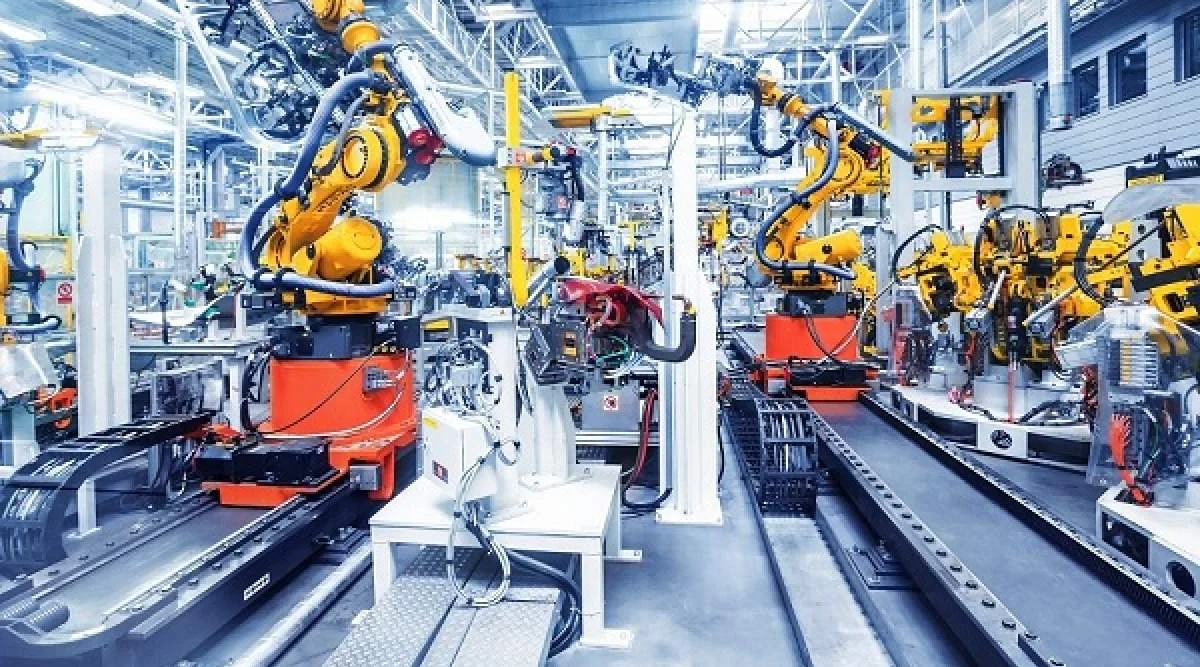
For example, an automotive assembly line may use Mitsubishi PLCs to control hundreds of operations, including component positioning, fastening, welding, and inspection.
The PLC ensures each manufacturing step occurs in the correct order while maintaining production speed and product quality.
Machine Control Applications
Machine automation is one of the strongest areas for Mitsubishi PLC technology. Many original equipment manufacturers (OEMs) select Mitsubishi PLCs because they offer compact designs, high-speed processing, and strong motion control capabilities.
Common machine applications include:
CNC equipment
Printing machines
Injection molding machines
Cutting systems
Assembly machines
Testing equipment
A machine builder can program a Mitsubishi PLC to control:
Sensors detecting product position
Motors controlling movement
Pneumatic systems
Safety interlocks
Operator controls
The flexibility of Mitsubishi PLC platforms allows manufacturers to create customized machines while maintaining reliable operation.
Mitsubishi PLC Applications in Packaging Automation
Packaging is one of the fastest-growing areas for industrial automation. Companies require packaging systems that operate quickly, accurately, and continuously to meet production demands.
Mitsubishi PLCs are commonly used in:
Filling machines
Labeling machines
Cartoning systems
Palletizing equipment
Wrapping machines
Sorting systems
A packaging machine may require precise coordination between:
Sensors detecting products
Servo motors controlling positioning
Pneumatic cylinders performing mechanical movements
Vision systems inspecting products
The Mitsubishi PLC acts as the central controller coordinating these devices.
For example, in a beverage packaging line, the PLC can control:
Bottle detection
Filling operation
Cap installation
Label application
Final inspection
This level of automation improves throughput while reducing product defects.
Related resources:
Mitsubishi PLC Applications in Robotics Integration
Robot Cell Control
Industrial robotics has become a major component of modern manufacturing, and PLCs play a critical role in coordinating robotic systems.
Mitsubishi PLCs are frequently used alongside industrial robots for applications including:
Welding
Assembly
Material handling
Pick-and-place operations
Machine tending
The PLC manages communication between robots and other factory equipment.
For example, in a robotic assembly cell:
Sensors detect incoming components
PLC sends a command to the robot
Robot performs assembly operations
Quality sensors verify completion
PLC sends the product to the next process stage
This integration creates a synchronized manufacturing environment.
Motion Control Applications
Advanced Mitsubishi PLC platforms support high-speed motion control applications requiring precise positioning.
Common applications include:
Servo positioning
Electronic cam control
Multi-axis synchronization
High-speed indexing systems
Industries such as semiconductor manufacturing and electronics assembly depend on extremely accurate motion control because even small positioning errors can affect product quality. Mitsubishi’s MELSEC platforms are designed to integrate with Mitsubishi servo amplifiers and motion controllers, creating a complete automation solution.
Mitsubishi PLC Applications in Process Industries
Industrial automation is not limited to discrete manufacturing. Mitsubishi PLC systems are also widely used in process industries where precise monitoring and control of temperature, pressure, flow, and level variables are essential. Unlike traditional machine automation, process applications often involve continuous operations that run for extended periods. These environments require highly reliable controllers capable of maintaining stable conditions while responding quickly to changing process variables.
Mitsubishi PLC platforms are commonly integrated with:
Analog input and output modules
Process transmitters
Control valves
Variable frequency drives (VFDs)
SCADA systems
Industrial communication networks
These systems allow operators and engineers to monitor processes, optimize production, and improve operational safety.
Mitsubishi PLC Applications in Water and Wastewater Treatment
Water and wastewater facilities depend heavily on automation because they operate continuously and require accurate control of complex processes.
Mitsubishi PLCs are frequently used in:
Pump control systems
Water filtration plants
Chemical dosing systems
Wastewater treatment facilities
Reservoir management systems
Lift stations
A typical water treatment automation system may use Mitsubishi PLCs to control:
Pump start and stop sequences
Tank level management
Flow regulation
Chemical injection rates
Alarm monitoring
For example, a wastewater treatment facility may use level sensors to monitor tank conditions. The PLC receives the sensor signals, compares them with programmed operating parameters, and automatically adjusts pumps or valves to maintain the correct process conditions.
This reduces energy consumption, improves reliability, and minimizes the risk of equipment failure.
Modern water infrastructure projects often integrate PLC systems with SCADA platforms to provide centralized monitoring and remote operation.
Mitsubishi PLC Applications in Oil and Gas Automation
Oil and gas facilities operate in demanding environments where reliability and safety are critical.
Automation systems in this industry must operate continuously while managing complex equipment such as:
Pumps
Compressors
Pipeline systems
Storage tanks
Processing units
Mitsubishi PLCs are used in applications such as:
Pump station automation
Valve control systems
Tank monitoring
Compressor sequencing
Safety monitoring
For example, pipeline pumping stations require precise control of motors, pressure levels, and flow conditions. A Mitsubishi PLC can monitor pressure transmitters and automatically adjust pump operation to maintain stable pipeline performance.
In addition, PLC systems can communicate with higher-level control platforms to provide operators with real-time information about equipment status and process conditions.
Safety remains a major consideration in oil and gas automation. PLC-based systems are often designed according to industrial safety requirements, including functional safety principles described in standards such as IEC 61508, which defines requirements for safety-related electrical, electronic, and programmable electronic systems.
Mitsubishi PLC Applications in Food and Beverage Manufacturing
The food and beverage industry requires automation systems that deliver high production rates while maintaining strict quality and hygiene standards.
Mitsubishi PLCs are commonly used in:
Food processing equipment
Bottling systems
Mixing systems
Refrigeration control
Cleaning systems
Packaging operations
Food manufacturing processes often require precise control of:
Temperature
Mixing ratios
Filling volumes
Conveyor speeds
Production timing
For example, in a dairy processing facility, Mitsubishi PLCs can control pasteurization systems by monitoring temperature sensors and automatically adjusting heating and cooling equipment.
Similarly, beverage production lines rely on PLC-controlled automation for filling, labeling, and packaging operations.
The ability to integrate PLCs with HMIs allows operators to easily monitor production information, adjust parameters, and respond quickly to alarms.
Mitsubishi PLC Applications in Automotive Manufacturing
The automotive industry has historically been one of the largest adopters of industrial automation technologies.
Automotive manufacturing requires exceptional precision because production facilities must assemble thousands of components while maintaining strict quality standards.
Mitsubishi PLC applications in automotive plants include:
Assembly line control
Robotic welding systems
Paint shop automation
Conveyor management
Engine testing systems
Quality inspection stations
A modern automotive production line may contain hundreds of automated stations working together.
The Mitsubishi PLC coordinates communication between:
Industrial robots
Sensors
Servo systems
Conveyor systems
Vision inspection equipment
For example, during vehicle assembly, sensors detect the position of a vehicle body moving along the production line. The PLC communicates with robotic systems to perform welding or fastening operations at precisely the correct location.
This level of synchronization improves production speed while reducing manufacturing defects.
Automotive manufacturers also rely on PLC data collection to analyze production performance, reduce downtime, and improve preventive maintenance strategies.
Mitsubishi PLC Applications in Semiconductor Manufacturing
Semiconductor manufacturing represents one of the most demanding automation environments in the world.
The production of semiconductor devices requires extremely precise processes performed in highly controlled environments.
Mitsubishi PLCs are used in applications such as:
Wafer handling systems
Semiconductor inspection equipment
Cleanroom automation
Material transport systems
Chemical processing equipment
Semiconductor facilities require automation systems capable of:
Extremely accurate positioning
High-speed response
Reliable communication
Continuous operation
Even a small equipment error can result in significant production losses. Therefore, automation systems must provide accurate control and dependable performance.
Mitsubishi PLCs are often integrated with motion control systems, servo drives, and industrial networks to support these high-precision applications.
Mitsubishi PLC Applications in Material Handling and Logistics Automation
Modern warehouses and distribution centers increasingly depend on automation to move products efficiently.
Mitsubishi PLCs are used in:
Conveyor systems
Automated storage and retrieval systems (AS/RS)
Sorting equipment
Automated guided vehicles (AGVs)
Pallet handling systems
Material handling automation requires precise coordination between multiple machines.
A Mitsubishi PLC can control:
Conveyor speeds
Product tracking
Sorting operations
Safety systems
Motor control
For example, in an automated distribution center, barcode scanners identify products while PLC-controlled conveyor systems automatically route packages to the correct destination. This improves operational efficiency and reduces manual handling requirements.
Mitsubishi PLC Applications in Energy Management Systems
Energy efficiency has become a major priority for industrial facilities. Automation systems help companies monitor energy consumption, optimize equipment operation, and reduce unnecessary power usage.
Mitsubishi PLCs are used in energy-related applications including:
Power monitoring systems
Motor management
HVAC automation
Renewable energy systems
Energy optimization projects
For example, PLC-controlled motor systems can adjust equipment speed based on production requirements using variable frequency drives. This reduces energy consumption while maintaining production performance.
In renewable energy applications, PLC systems can monitor and control equipment such as:
Solar tracking systems
Battery storage systems
Power distribution equipment
Advantages of Using Mitsubishi PLCs for Industrial Applications
Choosing the right PLC platform has a direct impact on system reliability, maintenance costs, and future scalability. Mitsubishi PLCs provide several advantages for industrial automation applications.
High Reliability in Industrial Environments
Industrial facilities operate under demanding conditions involving:
Temperature variations
Electrical interference
Mechanical vibration
Continuous operation
Mitsubishi PLC systems are designed for industrial environments where dependable operation is essential.
Fast Processing Performance
Modern manufacturing requires rapid response times.
Mitsubishi MELSEC PLC platforms provide high-speed processing capabilities that support:
Complex machine control
Motion applications
Large-scale automation systems
This makes them suitable for both simple machines and advanced production facilities.
Flexible Scalability
One of the major benefits of Mitsubishi PLC systems is scalability. Companies can start with smaller PLC systems and expand as automation requirements increase.
For example:
A small machine may use a compact MELSEC iQ-F controller.
A large manufacturing facility may require a MELSEC iQ-R system with multiple communication and control modules.
Strong Communication Capabilities
Modern factories require connected automation systems.
Mitsubishi PLCs support communication technologies including:
Ethernet
CC-Link IE
Modbus
Industrial network protocols
These capabilities allow integration with:
HMIs
SCADA systems
Robots
Motion controllers
Enterprise systems
Best Practices When Implementing Mitsubishi PLC Systems
Successful PLC implementation requires careful planning.
Define Automation Requirements Clearly
Before selecting a PLC, engineers should evaluate:
Number of inputs and outputs
Processing requirements
Communication requirements
Future expansion needs
Choosing the right controller prevents unnecessary upgrades later.
Design Reliable Control Architecture
A good automation design should include:
Proper network architecture
Safety considerations
Backup strategies
Preventive maintenance plans
Following industrial standards helps ensure reliable operation.
Prioritize Cybersecurity
As industrial systems become more connected, cybersecurity becomes increasingly important.
Companies should implement:
Network segmentation
Access controls
Secure communication practices
Regular software updates
Industrial cybersecurity practices align with standards such as IEC 62443, which provides guidelines for securing industrial automation and control systems.
Related Mitsubishi PLCs Articles
Frequently Asked Questions About Mitsubishi PLC Applications
What industries use Mitsubishi PLCs?
Mitsubishi PLCs are used across manufacturing, automotive, food and beverage, semiconductor, water treatment, energy, oil and gas, and logistics industries.
What are Mitsubishi PLCs commonly used for?
Mitsubishi PLCs are commonly used for machine control, production line automation, robotics integration, motion control, process monitoring, and industrial equipment management.
Are Mitsubishi PLCs suitable for large manufacturing facilities?
Yes. Mitsubishi offers scalable PLC platforms such as the MELSEC iQ-R Series designed for large industrial automation systems requiring advanced processing, networking, and expansion capabilities.
What programming software is used for Mitsubishi PLCs?
Mitsubishi PLCs are commonly programmed using GX Works engineering software, which supports programming, configuration, diagnostics, and system maintenance.
Can Mitsubishi PLCs communicate with SCADA systems?
Yes. Mitsubishi PLCs can integrate with SCADA platforms through industrial communication protocols such as Ethernet, Modbus, and other industrial networking technologies.
Are Mitsubishi PLCs used in Industry 4.0 applications?
Yes. Mitsubishi PLC systems support Industry 4.0 initiatives through industrial networking, data collection, connectivity with intelligent devices, and integration with advanced manufacturing systems.
What is the difference between Mitsubishi MELSEC iQ-R and iQ-F PLCs?
The MELSEC iQ-F Series is designed primarily for compact machine automation applications, while the MELSEC iQ-R Series is designed for larger, more complex automation systems requiring advanced control capabilities.
Mitsubishi PLCs Power the Future of Industrial Automation
Mitsubishi PLCs have become a trusted automation solution because they provide the reliability, performance, and flexibility required in modern industrial environments.
From manufacturing and robotics to process industries and smart factories, Mitsubishi PLC applications continue to expand as companies look for better ways to improve productivity, reduce downtime, and achieve greater operational efficiency.
Whether controlling a single machine or managing an entire production facility, Mitsubishi MELSEC PLC systems provide a powerful foundation for reliable industrial automation.
As factories continue moving toward Industry 4.0, connected manufacturing, and intelligent automation, Mitsubishi PLC technology will remain an important part of the industrial automation landscape.
Check Our Comprehensive Automation Brands Get Latest Industrial Automation News
Leave a Reply