Why Choose Automation Pioneer for Mitsubishi MELSEC PLC Solutions?, What Communication Protocols Does Mitsubishi MELSEC Support?, and What Programming Software Is Used for Mitsubishi MELSEC PLCs?
Mitsubishi MELSEC PLC Series: Complete Guide to Features, Applications, Programming, and Industrial Automation Solutions
Industrial automation has evolved dramatically over the past few decades, and programmable logic controllers (PLCs) remain at the heart of modern manufacturing systems. Among the industry’s most respected automation platforms, the Mitsubishi MELSEC PLC Series has earned a reputation for exceptional reliability, high-speed processing, scalable architecture, and seamless integration with factory automation technologies. From compact standalone machines to complex multi-line production facilities, MELSEC controllers provide the flexibility and performance required to meet today’s demanding industrial applications.
Developed by Mitsubishi Electric, the MELSEC family has become a preferred automation solution across automotive manufacturing, food and beverage processing, water treatment, semiconductor fabrication, pharmaceutical production, energy generation, logistics, and countless other industries. Its broad product portfolio allows engineers to select the right PLC platform based on application complexity, communication requirements, safety functions, and future expansion plans.
Whether you are designing a new automation system, upgrading aging controllers, or searching for replacement Mitsubishi PLC hardware, understanding the capabilities of the MELSEC product family helps ensure better engineering decisions and long-term operational efficiency.
What Is the Mitsubishi MELSEC PLC Series?
The Mitsubishi MELSEC PLC Series is a family of industrial programmable logic controllers designed to automate machinery, production lines, and industrial processes. Unlike traditional relay-based control systems, MELSEC PLCs execute user-defined logic programs to monitor field inputs, process control algorithms, and command outputs with exceptional speed and precision.
Since the introduction of the original MELSEC platform in the late 1970s, Mitsubishi Electric has continuously refined the architecture to accommodate increasingly sophisticated manufacturing environments. Today’s MELSEC controllers combine deterministic control, advanced networking, cybersecurity features, motion control, process automation, and Industrial Internet of Things (IIoT) connectivity into a unified automation platform.
Modern MELSEC PLCs support:
High-speed discrete machine control
Analog process control
Motion and servo synchronization
Safety control
Data logging
Edge computing
Predictive maintenance
SCADA integration
MES and ERP connectivity
Cloud-enabled manufacturing
One of Mitsubishi Electric’s greatest strengths is maintaining backward compatibility while continually introducing new technologies. This approach allows manufacturers to modernize existing automation infrastructure without completely replacing their control architecture.
For facilities seeking complete automation solutions, Automation Pioneer also offers a wide selection of industrial automation and process control products, including PLCs, HMIs, servo systems, industrial networking equipment, sensors, and electrical control components.
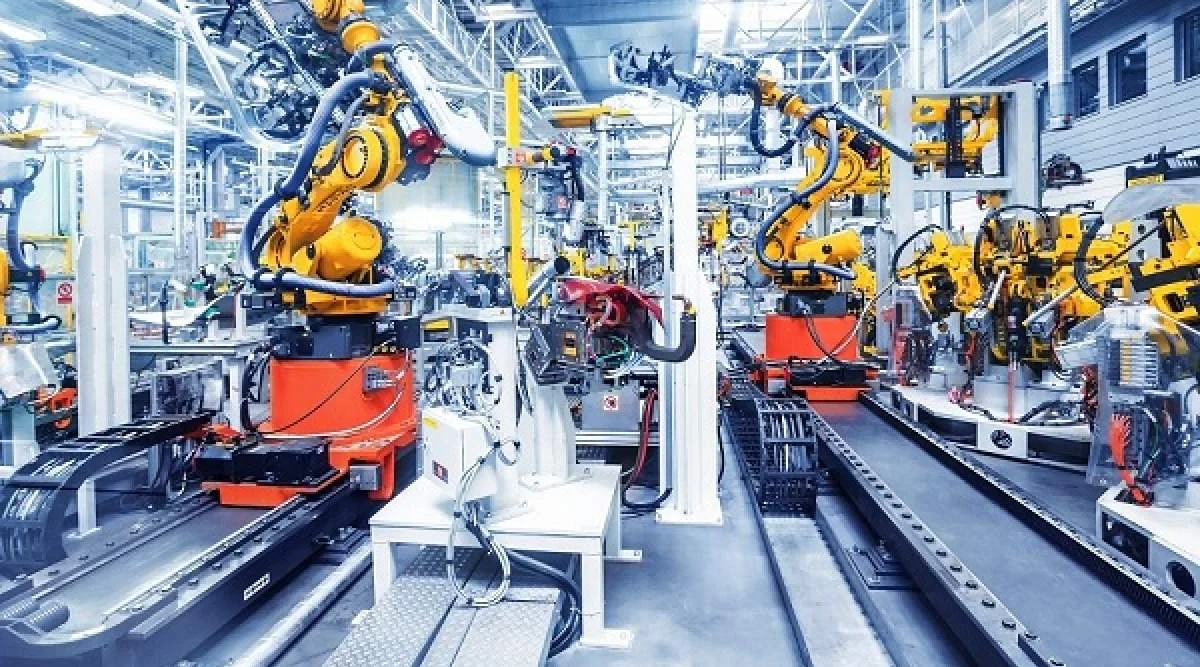
Mitsubishi MELSEC PLC platforms range from compact machine controllers to enterprise-scale modular automation systems.
Why Mitsubishi MELSEC PLCs Are Trusted Worldwide
Manufacturers rarely choose automation hardware based solely on specifications. They invest in platforms that deliver dependable operation over many years while minimizing downtime and simplifying maintenance. Mitsubishi Electric has built the MELSEC family around these practical engineering priorities.
Exceptional Reliability
Industrial environments expose automation equipment to vibration, electrical noise, fluctuating temperatures, and continuous operation. MELSEC PLCs are engineered to maintain reliable performance under these demanding conditions, making them suitable for mission-critical manufacturing applications.
Many production facilities continue operating MELSEC systems for well over a decade with minimal hardware failures, significantly reducing lifecycle costs.
High-Speed Processing
Production lines continue moving faster every year. Mitsubishi addresses this demand with processors capable of executing complex logic instructions in microseconds while simultaneously handling communications, motion control, and diagnostics.
This processing capability enables:
Faster machine response
Improved positioning accuracy
Reduced production cycle times
Better synchronization between equipment
Modular Scalability
One major advantage of the MELSEC architecture is scalability.
A manufacturer may begin with a compact standalone controller for a packaging machine and later expand to a fully networked production line with distributed I/O, redundant CPUs, safety modules, and motion controllers—all while remaining within the Mitsubishi ecosystem. This protects automation investments as production requirements evolve.
Integrated Factory Automation
Rather than treating PLCs as isolated controllers, Mitsubishi Electric integrates multiple automation technologies into a cohesive ecosystem, including:
Human Machine Interfaces (HMIs)
Variable Frequency Drives (VFDs)
Servo amplifiers
Robots
Safety controllers
Industrial Ethernet
SCADA systems
Energy monitoring devices
The result is improved communication between machines and reduced engineering complexity.
Mitsubishi MELSEC PLC Product Families
One of the greatest strengths of the MELSEC platform is its diverse product lineup. Each family addresses different automation requirements while sharing common programming tools and networking technologies.
MELSEC iQ-R Series
The MELSEC iQ-R Series represents Mitsubishi Electric’s flagship modular PLC platform for large-scale industrial automation. Designed for high-performance manufacturing environments, it delivers exceptional processing power, advanced diagnostics, redundant system configurations, and integrated cybersecurity capabilities.
The iQ-R Series is particularly well suited for:
Automotive manufacturing
Semiconductor fabrication
Pharmaceutical production
Chemical processing
Power generation
Large packaging facilities
Material handling systems
Water and wastewater treatment
Key capabilities include:
Multi-core CPU architecture
Large program memory
Built-in diagnostics
Redundant CPU options
Redundant power supplies
Integrated motion control
Safety CPU compatibility
Advanced industrial networking
Data logging
Edge computing functionality
According to Mitsubishi Electric technical documentation, the iQ-R platform is designed to maximize productivity while simplifying maintenance through comprehensive system diagnostics and lifecycle management.
MELSEC iQ-F Series
The MELSEC iQ-F Series combines compact dimensions with surprisingly powerful control capabilities.
These PLCs are widely used in:
Conveyor automation
Packaging machines
Textile machinery
Food processing equipment
Small robotic cells
OEM machine building
HVAC systems
Despite their compact size, iQ-F controllers support:
Ethernet communication
High-speed counters
Pulse outputs
Positioning control
Analog expansion
Remote I/O
Built-in data logging
Multiple communication protocols
Machine builders often select the iQ-F platform because it balances affordability, performance, and expandability.
MELSEC-Q Series
Although the iQ-R Series has become Mitsubishi’s flagship modular platform, the MELSEC-Q Series continues to operate successfully in thousands of facilities worldwide.
Known for its reliability and extensive installed base, the Q Series remains common in manufacturing plants requiring:
Distributed process control
Factory networking
Motion synchronization
High-speed automation
SCADA integration
Many organizations continue expanding existing Q Series installations due to their proven long-term performance and compatibility with legacy automation infrastructure.
MELSEC L Series
The MELSEC L Series bridges the gap between compact PLCs and large modular controllers.
Typical applications include:
Medium-sized manufacturing cells
Production equipment
Assembly systems
Material handling
Packaging automation
The platform offers modular flexibility without the complexity associated with larger enterprise automation systems.
Legacy MELSEC FX Series
The MELSEC FX Series helped establish Mitsubishi Electric as a global automation leader. Although newer iQ-F controllers have succeeded much of the FX product line, many facilities continue operating FX PLCs because of their exceptional durability. Engineers frequently encounter FX controllers during retrofit projects, modernization initiatives, and equipment upgrades.
Hardware Architecture of the Mitsubishi MELSEC PLC Series
The strength of the Mitsubishi MELSEC PLC Series extends well beyond its processing power. Its modular hardware architecture allows manufacturers to build automation systems that precisely match operational requirements while leaving room for future expansion. Whether controlling a single packaging machine or an entire manufacturing facility, MELSEC PLCs provide the flexibility to scale without redesigning the entire control system.
Rather than forcing engineers into a one-size-fits-all solution, Mitsubishi Electric offers a broad selection of CPUs, power supplies, I/O modules, communication interfaces, specialty modules, and motion controllers that work together as an integrated platform. This modular approach reduces engineering complexity, simplifies maintenance, and extends the useful life of automation investments.
For manufacturers planning a new control system or upgrading existing equipment, selecting the appropriate PLC hardware is just as important as choosing the right software. A well-designed architecture ensures reliable operation, easier troubleshooting, and lower lifecycle costs.
Central Processing Units (CPUs)
At the core of every MELSEC PLC is the CPU, which executes the user program, processes field data, manages communications, and coordinates automation tasks. Mitsubishi Electric offers several CPU options to accommodate applications ranging from simple machine control to enterprise-scale automation.
Standard CPUs
Standard CPUs are ideal for most discrete manufacturing applications, including assembly machines, conveyors, packaging systems, and material handling equipment. They provide fast scan times, substantial program memory, and built-in communication capabilities that support efficient machine operation.
These controllers are commonly deployed in industries such as automotive, food and beverage, electronics, and logistics, where deterministic control is essential.
High-Performance CPUs
Applications involving thousands of I/O points, complex calculations, or multiple communication networks require greater computing power. High-performance CPUs are designed to handle these demanding environments without sacrificing speed or reliability.
Typical applications include:
High-speed production lines
Semiconductor manufacturing
Printing and converting machinery
Pharmaceutical processing
Multi-axis motion systems
Large process automation projects
These CPUs execute control logic at extremely high speeds while simultaneously managing motion control, Ethernet communications, data logging, and diagnostic functions.
Process CPUs
Industries such as chemical processing, oil and gas, water treatment, and power generation often require continuous process control rather than discrete machine automation.
Process CPUs include features specifically developed for these environments, including advanced analog processing, PID control loops, redundant configurations, and enhanced process diagnostics.
Safety CPUs
Machine safety has become an integral component of modern industrial automation. Mitsubishi Electric addresses these requirements with dedicated Safety CPUs that support safety-rated control functions while integrating seamlessly with the standard automation platform.
Safety controllers help protect personnel and equipment by managing functions such as:
Emergency stop circuits
Safety gates
Light curtains
Safety scanners
Two-hand controls
Safe torque off (STO)
Safe motion functions
These systems are commonly implemented in accordance with internationally recognized functional safety standards, including IEC 61508 and ISO 13849, depending on the machine design and application requirements.
Redundant CPUs
For critical infrastructure where downtime is unacceptable, Mitsubishi offers redundant CPU configurations. Two processors operate simultaneously, allowing the standby CPU to assume control automatically if the primary controller experiences a fault.
Redundancy is frequently used in:
Power generation plants
Municipal water treatment facilities
Chemical processing
Oil refineries
Large manufacturing plants
Continuous production lines
By eliminating single points of failure, redundant architectures improve system availability and reduce the risk of costly production interruptions.
Modular MELSEC PLC hardware allows engineers to customize control systems with CPUs, I/O modules, communication cards, and specialty modules.
Input and Output (I/O) Modules
A PLC communicates with industrial equipment through its input and output modules. These modules collect information from field devices and send commands to machinery based on the programmed control logic. Mitsubishi offers an extensive portfolio of I/O modules that support virtually every industrial application.
Digital Input Modules
Digital inputs monitor binary devices that are either ON or OFF. Typical examples include:
Push buttons
Selector switches
Proximity sensors
Photoelectric sensors
Limit switches
Emergency stop contacts
Float switches
Safety interlocks
These inputs continuously monitor field conditions and provide real-time status information to the PLC.
Digital Output Modules
Digital outputs control devices that require discrete ON/OFF operation.
Common controlled devices include:
Contactors
Solenoid valves
Motor starters
Indicator lights
Alarm sirens
Relays
Pneumatic actuators
Depending on the application, engineers can select relay, transistor, or triac output modules to match the electrical characteristics of the controlled equipment.
Analog Input Modules
Many industrial processes require continuous measurement rather than simple ON/OFF signals.
Analog input modules acquire data from instruments such as:
Pressure transmitters
Flow meters
Temperature sensors
Level transmitters
pH analyzers
Conductivity sensors
Humidity sensors
Load cells
These modules support common industrial signal standards, including 4–20 mA, 0–10 V, ±10 V, thermocouples, and RTDs, enabling precise process monitoring and control.
Analog Output Modules
Analog outputs allow the PLC to regulate devices that require continuously variable signals.
Typical applications include controlling:
Variable frequency drives (VFDs)
Control valves
Servo amplifiers
Proportional hydraulic valves
Temperature controllers
Dosing pumps
This capability enables smooth, accurate regulation of speed, pressure, flow, temperature, and other critical process variables.
Specialty Modules
Beyond standard I/O, Mitsubishi provides a wide range of specialty modules for advanced automation tasks, including:
High-speed counters
Motion control
Positioning
Temperature control
Weighing systems
Barcode readers
RFID interfaces
Serial communications
Data logging
Energy monitoring
PID process control
These modules eliminate the need for many external controllers, simplifying system design and reducing installation costs.
Industrial Communication Networks
Modern manufacturing depends on reliable communication between controllers, sensors, robots, drives, HMIs, and enterprise systems. The MELSEC PLC Series supports a comprehensive range of industrial communication technologies that enable seamless data exchange across the factory floor.
CC-Link and CC-Link IE
Developed by the CC-Link Partner Association (CLPA), CC-Link is one of the most widely adopted industrial networks in Asia and is increasingly used worldwide. It provides deterministic communication for distributed I/O, motion control, and device-level networking.
For applications requiring greater bandwidth, CC-Link IE extends these capabilities with gigabit Ethernet performance, supporting large volumes of real-time data while maintaining deterministic communication.
These networks are particularly well suited for high-speed manufacturing lines where synchronized communication between multiple controllers and intelligent devices is essential.
Ethernet-Based Communications
Ethernet has become the backbone of modern industrial automation, and MELSEC PLCs support a variety of Ethernet protocols that facilitate integration with third-party systems, SCADA platforms, and enterprise software.
Supported technologies include:
Ethernet/IP (where applicable through modules or gateways)
Modbus TCP
SLMP (Seamless Message Protocol)
TCP/IP
UDP/IP
OPC connectivity through compatible solutions
These protocols simplify communication with HMIs, industrial PCs, vision systems, databases, and manufacturing execution systems (MES).
Serial Communication
Many legacy devices remain in operation across industrial facilities. To protect existing investments, MELSEC PLCs continue to support serial communication standards such as RS-232 and RS-485 through dedicated communication modules. These interfaces enable integration with barcode scanners, weigh scales, printers, and older field instruments that are still critical to production.
Programming Software: GX Works3
Programming efficiency is just as important as hardware performance. Mitsubishi Electric’s GX Works3 engineering software provides a modern development environment for configuring, programming, debugging, and maintaining MELSEC iQ-R and iQ-F controllers.
The software supports project management, hardware configuration, diagnostics, simulation, and online monitoring within a unified interface, reducing engineering time and simplifying commissioning.
GX Works3 is designed in accordance with the principles of IEC 61131-3, the international standard for programmable controller programming languages. Engineers can develop applications using multiple languages within the same project, including:
Ladder Diagram (LD)
Structured Text (ST)
Function Block Diagram (FBD)
Sequential Function Chart (SFC)
This flexibility allows teams to select the most appropriate language for each control task while promoting code readability and long-term maintainability.
Well-organized programming, combined with built-in diagnostics and simulation tools, helps shorten development cycles, reduce commissioning time, and streamline future system modifications.
Programming Languages and Development Environment
One of the reasons the Mitsubishi MELSEC PLC Series is widely adopted across industries is its flexible programming environment. Whether you are maintaining legacy equipment or developing a new Industry 4.0 production line, Mitsubishi Electric provides engineering tools that accommodate both traditional PLC programmers and software-oriented automation engineers.
Unlike older PLC platforms that relied almost exclusively on ladder logic, modern MELSEC controllers support multiple programming languages defined by IEC 61131-3, allowing development teams to choose the most appropriate language for each task. This flexibility improves code readability, reduces development time, and simplifies long-term maintenance.
Ladder Diagram (LD)
Ladder Diagram remains the most widely used programming language in industrial automation due to its familiarity and ease of troubleshooting. It represents electrical relay logic using graphical symbols, making it intuitive for electricians, maintenance technicians, and controls engineers.
Ladder logic is particularly effective for:
Motor start/stop circuits
Conveyor control
Interlocking systems
Alarm handling
Sequential machine operations
Digital input/output control
Its visual format also simplifies online diagnostics, allowing maintenance personnel to quickly identify the current state of inputs, outputs, timers, and internal memory bits during troubleshooting.
Structured Text (ST)
As manufacturing systems become more sophisticated, many engineers prefer Structured Text (ST) for complex calculations and advanced control algorithms. Structured Text resembles high-level programming languages such as Pascal, making it well suited for mathematical operations, data manipulation, and reusable software modules.
Common applications include:
Statistical process calculations
Recipe management
Batch processing
Data conversion
String handling
Predictive maintenance algorithms
Energy management calculations
Using Structured Text alongside Ladder Diagram enables engineers to combine graphical machine control with powerful software logic in a single project.
Function Block Diagram (FBD)
Function Block Diagram provides a graphical method of connecting reusable software blocks. Each block performs a specific function, such as PID control, scaling, filtering, or signal conditioning.
FBD is especially useful for:
Analog process control
Temperature regulation
Flow control
Pressure loops
Process calculations
Motion control functions
Because function blocks can be reused across multiple projects, engineering teams can standardize programming practices while reducing development effort.
Sequential Function Chart (SFC)
Many industrial machines follow a series of defined operational steps. Sequential Function Chart simplifies programming these sequences by organizing machine behavior into states and transitions.
Typical examples include:
Packaging machines
Robotic assembly cells
Palletizing systems
Batch processing
Automated inspection stations
SFC improves program readability, making complex automation sequences easier to understand and maintain.
Motion Control and Servo Integration
Modern manufacturing increasingly demands precise, synchronized motion across multiple machine axes. The MELSEC PLC Series integrates seamlessly with Mitsubishi Electric servo systems, enabling coordinated control of positioning, speed, and torque without requiring a separate motion controller for many applications.
This integration is particularly valuable in industries where precision directly affects product quality and throughput.
Multi-Axis Motion Control
High-speed production equipment often requires multiple motors to move in perfect synchronization. MELSEC controllers can coordinate numerous servo axes for applications such as:
Pick-and-place robots
CNC machinery
Packaging equipment
Printing presses
Electronic component assembly
Material handling systems
Accurate synchronization minimizes mechanical stress, improves repeatability, and increases production efficiency.
Electronic Cam and Gear Functions
Machines with rotating shafts or synchronized conveyors frequently rely on electronic camming and gearing. These functions allow one servo axis to follow another electronically, eliminating many mechanical components such as gears, chains, and camshafts.
Benefits include:
Reduced mechanical wear
Simplified machine design
Faster changeovers
Higher positioning accuracy
Lower maintenance requirements
Integrated Positioning
MELSEC PLCs support high-speed positioning applications without requiring extensive external hardware. Engineers can configure motion profiles for linear actuators, rotary tables, indexing systems, and gantry robots directly within the automation platform. This simplifies commissioning while reducing wiring and cabinet space.
Mitsubishi MELSEC PLCs integrate seamlessly with servo systems to deliver precise multi-axis motion control for high-speed manufacturing.
Human-Machine Interface (HMI) Integration
An automation system is only as effective as the information available to machine operators and maintenance personnel. Mitsubishi Electric addresses this need through its GOT (Graphic Operation Terminal) Human-Machine Interface (HMI) family, which integrates closely with MELSEC PLCs.
HMIs provide a graphical interface that allows operators to monitor machine status, adjust parameters, acknowledge alarms, and visualize production data in real time.
Improved Operator Productivity
Instead of relying on indicator lights and push buttons alone, modern HMIs display comprehensive operational information, including:
Machine status
Production counts
Alarm history
Trend graphs
Equipment diagnostics
Recipe selection
Maintenance reminders
Energy consumption
This information enables operators to respond more quickly to process changes and reduces downtime caused by delayed fault identification.
Simplified Maintenance
Maintenance personnel benefit from detailed diagnostic screens that display active faults, communication status, I/O conditions, and device health.
Rather than tracing wires through an electrical cabinet, technicians can identify many issues directly from the HMI, significantly reducing troubleshooting time.
Remote Monitoring
Many MELSEC systems support remote visualization through Ethernet-based communication, allowing authorized engineers to monitor production equipment from centralized control rooms or maintenance workstations.
Remote diagnostics reduce travel time, accelerate troubleshooting, and improve support for geographically distributed manufacturing facilities.
Industry 4.0 and IIoT Capabilities
Manufacturing is rapidly transitioning toward connected, data-driven operations. The Mitsubishi MELSEC PLC Series has evolved to support Industry 4.0 initiatives by enabling secure communication between production equipment, enterprise software, and cloud-based analytics platforms.
Rather than functioning solely as machine controllers, modern MELSEC PLCs serve as intelligent edge devices that collect, process, and distribute operational data throughout the manufacturing enterprise.
Edge Computing
Processing data at the machine level reduces network traffic and allows faster operational decisions. MELSEC controllers can analyze production data locally before transmitting relevant information to supervisory systems.
This approach supports applications such as:
Predictive maintenance
Machine performance analysis
Quality monitoring
Energy optimization
Production reporting
Manufacturing Execution System (MES) Integration
Manufacturers increasingly connect PLCs with Manufacturing Execution Systems (MES) to improve production visibility and scheduling.
MELSEC controllers can exchange information such as:
Production counts
Machine status
Downtime events
Product recipes
Batch information
Equipment utilization
This integration helps management make informed operational decisions based on real-time production data.
SCADA Connectivity
Supervisory Control and Data Acquisition (SCADA) systems provide centralized monitoring for industrial facilities. MELSEC PLCs integrate with many leading SCADA platforms through standard industrial communication protocols, enabling operators to supervise multiple production lines from a single interface.
SCADA integration supports:
Alarm management
Historical trending
Process visualization
Production reporting
Asset monitoring
Remote operations
Cloud Connectivity
As digital transformation initiatives continue to expand, manufacturers increasingly leverage cloud platforms for long-term data storage, analytics, and remote asset management.
While cloud architecture depends on the overall system design and cybersecurity requirements, MELSEC controllers can serve as a reliable source of operational data for cloud-enabled manufacturing strategies.
Cybersecurity for Connected Manufacturing
The growing connectivity of industrial control systems has increased the importance of cybersecurity. Mitsubishi Electric incorporates security features into the MELSEC platform to help manufacturers protect automation assets while maintaining operational reliability.
Recommended cybersecurity practices include:
User authentication
Password protection
Access privilege management
Secure network segmentation
Controlled remote access
Firmware management
Regular software updates
Industrial firewall deployment
Network monitoring
In addition to product-specific security features, organizations should align their industrial cybersecurity programs with recognized standards such as IEC 62443, which provides guidance for securing industrial automation and control systems.
Combining secure system architecture with disciplined operational procedures helps reduce cyber risk while supporting safe and reliable production.
Reliability and Lifecycle Support
Industrial automation equipment is expected to operate continuously for many years. Mitsubishi Electric designs the MELSEC PLC Series with long product lifecycles, backward compatibility, and comprehensive diagnostic capabilities that support maintainability over time.
Features such as module-level diagnostics, error logging, and online monitoring allow maintenance teams to identify issues before they lead to unplanned downtime. In addition, Mitsubishi’s long-term support strategy helps manufacturers modernize systems gradually, protecting existing investments while adopting newer technologies when appropriate.
For facilities with aging MELSEC installations, upgrading CPUs, communication modules, or HMIs can often improve performance without requiring a complete system replacement, reducing both capital costs and production disruption.
Industrial Applications of the Mitsubishi MELSEC PLC Series
The Mitsubishi MELSEC PLC Series has become a trusted automation platform across a wide range of industries because it combines reliability, performance, and flexibility. While PLC technology is often associated with machine control, modern MELSEC systems now support complete industrial automation architectures that connect field devices, production equipment, supervisory systems, and enterprise platforms.
From controlling a single automated workstation to managing a complete manufacturing facility, MELSEC controllers provide the processing capability, communication infrastructure, and engineering tools required for modern production environments.
The following industries represent some of the most common applications where Mitsubishi MELSEC PLC systems deliver measurable improvements in productivity, quality, and operational efficiency.
Automotive Manufacturing Automation
The automotive industry has historically been one of the largest adopters of advanced PLC technology. Automotive plants require extremely reliable automation systems capable of controlling thousands of synchronized operations while maintaining strict quality standards.
Mitsubishi MELSEC PLCs are widely used throughout automotive production environments, including:
Body welding lines
Robotic assembly cells
Paint systems
Engine assembly
Battery manufacturing
Inspection stations
Material handling systems
Conveyor networks
Automotive manufacturing requires precise coordination between robots, servo systems, sensors, vision systems, and safety devices. MELSEC controllers provide the high-speed processing and deterministic communication required to synchronize these complex systems.
For example, a vehicle assembly line may use MELSEC PLCs to coordinate robotic welding stations, monitor safety zones, control conveyor movement, collect production data, and communicate machine status to a manufacturing execution system.
The ability to integrate PLC control, motion systems, and industrial networks into a unified architecture helps manufacturers reduce cycle times while maintaining consistent product quality.
Food and Beverage Processing Automation
Food and beverage manufacturers operate under strict requirements for hygiene, traceability, and production consistency. Automation systems must maintain accurate control over temperatures, pressures, flow rates, filling operations, packaging processes, and cleaning cycles.
MELSEC PLC applications in food processing include:
Mixing and batching systems
Filling machines
Bottling lines
Packaging equipment
Refrigeration systems
CIP (Clean-in-Place) systems
Conveyor automation
Process control capabilities such as PID regulation, analog signal processing, and recipe management make MELSEC platforms suitable for applications requiring precise control of critical parameters.
For example, a beverage production facility may use pressure transmitters, temperature sensors, flow meters, and control valves connected to a MELSEC PLC to maintain consistent product quality throughout the manufacturing process.
Additionally, PLC data collection supports traceability requirements by recording production parameters, batch information, and equipment performance.
Pharmaceutical and Life Sciences Automation
Pharmaceutical manufacturing requires some of the highest levels of process control accuracy and documentation. Automation systems must maintain strict environmental conditions, ensure repeatability, and support regulatory compliance requirements.
MELSEC PLC systems are used in applications such as:
Laboratory automation
Cleanroom monitoring
Filling and packaging systems
Mixing and formulation processes
Temperature-controlled storage
Water purification systems
Critical parameters including temperature, pressure, humidity, and flow must be continuously monitored and controlled.
The combination of MELSEC PLCs with industrial instrumentation, HMIs, and supervisory systems enables manufacturers to maintain reliable operation while creating detailed production records.
In regulated environments, engineers typically design automation systems according to applicable standards and validation requirements, including principles associated with Good Manufacturing Practices (GMP) and industry-specific quality management systems.
Water and Wastewater Treatment Automation
Municipal and industrial water treatment facilities depend on automation systems that operate continuously with minimal interruption. PLC reliability is particularly important because many treatment processes must run 24 hours per day.
MELSEC PLCs are commonly applied in:
Pump control stations
Filtration systems
Chemical dosing systems
Water distribution networks
Wastewater treatment plants
Remote monitoring stations
Typical control functions include:
Pump sequencing
Level monitoring
Flow regulation
Chemical injection control
Alarm management
Equipment diagnostics
For example, a wastewater facility may use PLC-controlled variable frequency drives to optimize pump operation based on tank levels and flow demand. This reduces energy consumption while maintaining stable system performance.
Integration with SCADA systems allows operators to monitor multiple facilities from a centralized location, improving response time and operational visibility.
Energy and Power Generation Automation
Energy facilities require automation systems that prioritize reliability, availability, and accurate monitoring. Mitsubishi MELSEC PLCs are used in various energy-related applications, including:
Renewable energy systems
Power distribution equipment
Generator monitoring
Cooling systems
Auxiliary equipment control
Energy management systems
In renewable energy applications such as solar and wind facilities, PLC systems monitor equipment performance, manage auxiliary systems, collect operational data, and communicate with supervisory platforms.
For example, a solar facility may use PLC-based automation to monitor inverter status, environmental sensors, tracking mechanisms, and electrical parameters while providing operators with real-time performance information.
Semiconductor and Electronics Manufacturing
Semiconductor manufacturing demands extremely precise automation due to strict requirements for cleanliness, repeatability, and process stability.
MELSEC PLC systems support applications including:
Wafer handling equipment
Automated material transport
Assembly machines
Testing systems
Cleanroom automation
Precision positioning systems
These environments require:
High-speed processing
Accurate motion control
Reliable communication
Minimal downtime
Precise environmental control
MELSEC integration with servo systems and advanced networking technologies allows equipment manufacturers to achieve the accuracy required for next-generation electronics production.
Selecting the Right Mitsubishi MELSEC PLC Series
Choosing the correct PLC platform requires careful evaluation of application requirements, future expansion plans, and operational objectives. The most powerful controller is not always the best choice; instead, engineers should select a platform that provides the necessary performance while maintaining cost efficiency and maintainability.
Several factors should guide the selection process.
Application Size and Complexity
The first consideration is the scale of the automation system.
Small Machine Applications
For compact machines with limited I/O requirements, the MELSEC iQ-F Series is often an excellent choice.
Typical applications include:
Packaging machines
Small conveyors
Assembly equipment
Automated test stations
Its compact design, built-in communication capabilities, and expandable architecture make it ideal for OEM machine builders.
Medium Automation Systems
For larger machines requiring additional I/O, communication modules, and advanced control features, the MELSEC L Series provides a balance between capability and simplicity.
Large Manufacturing Systems
Large-scale production facilities typically require the advanced processing power and modular architecture of the MELSEC iQ-R Series.
These systems are appropriate when applications involve:
Thousands of I/O points
Multiple production lines
Advanced motion control
Safety integration
Redundant operation
Enterprise connectivity
Processing Requirements
Engineers should evaluate:
Program size
Scan time requirements
Number of controlled devices
Communication workload
Data processing requirements
Motion control complexity
High-speed manufacturing applications may require advanced CPUs capable of executing multiple tasks simultaneously without affecting machine performance.
Communication Requirements
Modern automation systems rarely operate independently. PLC selection should consider how the controller will communicate with:
HMIs
Robots
Drives
Sensors
SCADA systems
MES platforms
Cloud systems
MELSEC platforms support multiple industrial communication technologies, making them suitable for both traditional automation systems and connected Industry 4.0 environments.
Safety Requirements
Machine safety requirements must be considered during the initial design phase rather than added after installation.
Engineers should evaluate:
Required safety level
Emergency shutdown requirements
Safety device integration
Risk assessment results
Applicable regulations
Depending on the application, safety PLCs or dedicated safety modules may be required to meet standards such as ISO 13849 and IEC 61508.
Mitsubishi MELSEC PLC Maintenance Best Practices
Even the most reliable automation hardware requires proper maintenance. A structured maintenance program helps maximize equipment availability and prevent unexpected failures.
Recommended practices include:
Maintain Updated Documentation
Accurate documentation should include:
PLC programs
Electrical drawings
Network diagrams
I/O lists
Backup files
Hardware configurations
Proper documentation reduces troubleshooting time when engineering changes or repairs are required.
Perform Regular Program Backups
PLC programs should be backed up regularly and stored securely. Losing a controller program can result in significant production downtime and expensive recovery efforts.
Organizations should maintain:
Current PLC project files
HMI applications
Parameter settings
Network configurations
Monitor System Diagnostics
MELSEC PLC diagnostic tools provide valuable information about:
CPU health
Communication errors
Module status
Network conditions
Hardware faults
Regular monitoring allows maintenance teams to identify developing problems before they become production interruptions.
Manage Spare Parts Strategically
Critical automation components should have appropriate spare inventory based on equipment importance and supplier lead times.
Common spare items include:
PLC CPUs
Power supplies
Communication modules
Input/output modules
Memory cards
Network components
Maintaining strategic spares helps reduce downtime during unexpected failures.
MELSEC PLC systems support complete industrial automation solutions from machine control to centralized production monitoring.
Advantages of the Mitsubishi MELSEC PLC Series
Selecting a PLC platform is a long-term engineering decision that affects machine performance, maintenance requirements, production uptime, and future expansion capabilities. While many PLC manufacturers offer reliable automation solutions, the Mitsubishi MELSEC PLC Series has established a strong position because it combines advanced technology with practical engineering considerations.
Manufacturers, system integrators, and machine builders often choose MELSEC controllers because they deliver a balanced combination of speed, flexibility, reliability, and lifecycle support.
The following advantages explain why MELSEC remains one of the most widely deployed PLC platforms in industrial automation.
High Performance and Fast Execution Speed
Modern manufacturing environments demand faster machine cycles, increased production volumes, and tighter process control. A PLC must process inputs, execute logic, communicate with other devices, and update outputs within extremely short timeframes.
Mitsubishi MELSEC controllers are designed with high-speed processing architectures that allow them to handle demanding applications without sacrificing reliability.
High-performance processing benefits include:
Faster machine response
Improved synchronization between devices
Reduced production cycle times
More precise motion control
Increased throughput
Better handling of complex programs
For industries such as automotive manufacturing, semiconductor production, and precision assembly, even small improvements in processing speed can create significant productivity gains.
Scalable Architecture for Growing Operations
One of the biggest challenges manufacturers face is designing automation systems that can adapt as production requirements change. A system that works today may require additional equipment, sensors, robots, or production capacity in the future. The MELSEC architecture addresses this challenge through modular scalability.
A company may begin with a compact PLC controlling a single machine and later expand by adding:
Additional I/O modules
Communication networks
Motion controllers
Safety systems
Remote I/O stations
Advanced monitoring systems
This scalability protects the original automation investment and reduces the need for complete system redesigns.
Strong Integration With Mitsubishi Automation Ecosystem
A major advantage of selecting MELSEC PLCs is the ability to integrate with Mitsubishi Electric’s broader factory automation portfolio.
The MELSEC ecosystem includes:
Servo motors and amplifiers
Variable frequency drives
HMIs
Robots
Industrial networks
Safety products
Motion controllers
CNC systems
Because these components are designed to work together, engineers can reduce integration complexity and improve system reliability. For example, a machine builder can combine a MELSEC PLC, Mitsubishi servo system, GOT HMI, and variable frequency drive into a coordinated automation solution with simplified communication and diagnostics.
Long Product Lifecycle and Investment Protection
Industrial automation systems often remain operational for 10, 15, or even 20 years. Frequent hardware changes create unnecessary costs because they require engineering modifications, employee retraining, and production downtime.
Mitsubishi Electric has historically supported long product lifecycles, allowing manufacturers to maintain existing installations while gradually upgrading technology.
This approach provides several benefits:
Reduced migration costs
Easier spare parts management
Simplified maintenance
Lower training requirements
Extended equipment lifespan
For companies operating large manufacturing facilities, lifecycle stability is often just as important as initial equipment performance.
Mitsubishi MELSEC PLC vs Other Leading PLC Platforms
The industrial automation market includes several major PLC manufacturers, each with unique strengths. The best choice depends on application requirements, engineering expertise, installed infrastructure, and regional support availability.
Commonly compared PLC platforms include:
Mitsubishi MELSEC
Siemens SIMATIC
Allen-Bradley ControlLogix
Omron PLC
Schneider Electric Modicon
Mitsubishi MELSEC vs Siemens SIMATIC
Siemens SIMATIC PLC systems are widely used throughout Europe and many global manufacturing industries.
Both Mitsubishi MELSEC and Siemens SIMATIC platforms provide:
Modular architectures
Advanced networking
Motion control capabilities
Safety solutions
Industrial communication
MELSEC is particularly strong in applications requiring high-speed machine control, compact automation, and integration with Mitsubishi motion products.
Siemens platforms have significant adoption in process automation, European manufacturing, and large industrial installations.
The final selection typically depends on existing plant standards, engineering expertise, and regional ecosystem requirements.
Mitsubishi MELSEC vs Allen-Bradley ControlLogix
Rockwell Automation Allen-Bradley ControlLogix is one of the most widely recognized PLC platforms in North America.
Both platforms support:
Large-scale automation
Industrial Ethernet communication
Safety systems
Motion control
Enterprise integration
MELSEC often provides strong value in high-speed machine automation applications, while Allen-Bradley systems have extensive adoption among North American manufacturers, particularly those standardized around Rockwell Automation architectures. For companies upgrading existing equipment, compatibility with installed systems often becomes a major deciding factor.
Mitsubishi MELSEC vs Omron PLC Systems
Omron Corporation PLC platforms are known for strong machine automation capabilities, sensing technologies, and integrated manufacturing solutions.
Both Mitsubishi and Omron provide:
Compact PLC solutions
Motion control
Industrial communication
Safety technologies
Machine automation tools
Mitsubishi’s advantage often comes from its broad automation ecosystem, particularly where servo systems, drives, and robotics are part of the overall solution.
Mitsubishi MELSEC PLC Applications in Smart Manufacturing
The future of manufacturing depends increasingly on connectivity, analytics, and intelligent automation. The MELSEC PLC Series plays an important role in enabling smart manufacturing strategies by acting as the connection point between physical equipment and digital systems.
Predictive Maintenance
Traditional maintenance strategies often rely on fixed schedules or reactive repairs after equipment failure occurs. Modern automation systems increasingly use real-time data to predict potential problems before failures happen.
MELSEC-based systems can collect information such as:
Motor operating hours
Temperature conditions
Vibration data
Production cycles
Alarm history
Energy consumption
This information can support predictive maintenance programs that reduce downtime and improve asset utilization.
Energy Management
Energy costs represent a significant operational expense for many industries. Automation systems can help manufacturers identify waste and optimize equipment operation.
MELSEC PLC applications for energy management include:
Monitoring power consumption
Optimizing motor operation
Managing HVAC systems
Tracking machine efficiency
Identifying abnormal energy usage
By combining PLC data with energy monitoring systems, facilities can make informed decisions that reduce operating costs.
Digital Twin and Simulation Applications
As manufacturers adopt advanced engineering methods, digital simulation and digital twin technologies are becoming increasingly common.
PLC programs and automation data can support digital manufacturing initiatives by providing real-world operating information used for:
Virtual commissioning
Machine optimization
Process simulation
Production planning
These capabilities help companies reduce engineering time and improve equipment performance before physical implementation.
How Automation Pioneer Supports Mitsubishi MELSEC PLC Solutions
Industrial automation projects require more than simply purchasing hardware. Engineers and maintenance teams need access to reliable products, accurate technical information, and responsive supply support.
Automation Pioneer provides industrial automation components for manufacturers, system integrators, OEMs, and maintenance organizations requiring dependable sourcing solutions.
The company supports customers searching for:
Mitsubishi MELSEC PLC CPUs
Digital and analog I/O modules
Communication modules
Power supplies
Expansion units
HMIs
Servo components
Industrial networking products
Replacement automation hardware
By maintaining access to a broad industrial automation product portfolio, Automation Pioneer helps customers reduce equipment downtime and simplify procurement.
For organizations managing critical production environments, sourcing the correct automation components quickly can directly impact operational performance.
Best Practices When Implementing a Mitsubishi MELSEC PLC System
Successful PLC implementation requires careful planning beyond selecting hardware. Engineering teams should consider system design, programming standards, cybersecurity, maintenance strategy, and future expansion.
Develop a Clear Control Architecture
Before programming begins, engineers should define:
System requirements
Network structure
Device communication methods
Safety requirements
Future expansion plans
A well-designed architecture reduces complexity and improves long-term reliability.
Follow Structured Programming Practices
Large PLC programs become difficult to maintain without organization.
Recommended practices include:
Consistent naming conventions
Modular programming
Clear comments
Standardized function blocks
Version control
Documented changes
These practices allow different engineers and technicians to understand the system throughout its lifecycle.
Design for Maintenance
Automation systems should be designed with maintenance personnel in mind.
Useful features include:
Clear HMI diagnostics
Alarm descriptions
Accessible hardware layout
Spare part planning
Backup procedures
A system that is easy to troubleshoot reduces downtime and improves operational efficiency.
Mitsubishi MELSEC PLC Series: Final Recommendation
The Mitsubishi MELSEC PLC Series remains one of the strongest automation platforms available for manufacturers seeking dependable, scalable, and high-performance control solutions.
Its broad product range allows engineers to select the right controller for nearly any application, from compact OEM machinery to complex industrial production facilities. With advanced processing capabilities, strong networking options, integrated motion control, and support for Industry 4.0 initiatives, MELSEC continues to evolve alongside modern manufacturing requirements.
Whether you are replacing an aging PLC, designing a new automated machine, or expanding a connected factory environment, Mitsubishi MELSEC provides the reliability and flexibility required for long-term success.
For companies investing in industrial automation infrastructure, selecting a proven PLC platform is not simply a hardware decision—it is a strategic investment in productivity, operational reliability, and future manufacturing capability.
Related Mitsubishi PLCs Articles
Frequently Asked Questions About Mitsubishi MELSEC PLC Series (FAQ Schema)
The following frequently asked questions address common search queries from engineers, maintenance professionals, system integrators, OEM machine builders, and organizations evaluating Mitsubishi MELSEC PLC solutions.
What Is the Mitsubishi MELSEC PLC Series Used For?
The Mitsubishi MELSEC PLC Series is used for controlling and automating industrial machines, production lines, and process systems across multiple industries. Applications include automotive manufacturing, packaging, food processing, semiconductor equipment, water treatment, energy systems, material handling, and factory automation.
MELSEC PLCs control industrial devices by receiving signals from sensors and field instruments, processing programmed logic, and sending commands to motors, valves, actuators, robots, and other equipment.
The platform supports applications ranging from simple machine automation using compact controllers such as the MELSEC iQ-F Series to complex factory-wide automation systems using the MELSEC iQ-R Series.
Which Mitsubishi MELSEC PLC Series Should I Choose for My Application?
The correct MELSEC PLC depends on system size, processing requirements, communication needs, and future expansion plans.
Generally:
MELSEC iQ-F Series is suitable for compact machines, OEM equipment, and applications requiring affordable yet powerful control.
MELSEC L Series is appropriate for medium-scale automation systems requiring integrated functionality and modular expansion.
MELSEC iQ-R Series is designed for advanced manufacturing systems requiring high-speed processing, large-scale I/O, motion control, safety integration, and industrial networking.
Before selecting a PLC, engineers should evaluate:
Number of digital and analog I/O points
Required scan time
Communication protocols
Motion control requirements
Safety requirements
Environmental conditions
Future system expansion
A properly sized PLC provides better performance while avoiding unnecessary hardware costs.
What Programming Software Is Used for Mitsubishi MELSEC PLCs?
Mitsubishi MELSEC PLCs are primarily programmed using Mitsubishi Electric engineering software, including GX Works3 for newer platforms such as MELSEC iQ-R and iQ-F controllers.
GX Works3 provides tools for:
PLC programming
Hardware configuration
Online monitoring
Troubleshooting
Simulation
Diagnostics
Project management
The software supports IEC 61131-3 programming languages, including:
Ladder Diagram (LD)
Structured Text (ST)
Function Block Diagram (FBD)
Sequential Function Chart (SFC)
For legacy MELSEC systems, earlier software platforms such as GX Developer and GX Works2 may still be encountered in existing installations.
Are Mitsubishi MELSEC PLCs Compatible With Industry 4.0 and IIoT Applications?
Yes. Modern Mitsubishi MELSEC PLC platforms are designed to support Industry 4.0 manufacturing environments by enabling communication between production equipment, industrial networks, supervisory systems, and enterprise platforms.
MELSEC systems support smart manufacturing applications such as:
Real-time production monitoring
Predictive maintenance
Equipment performance analysis
Energy management
Manufacturing data collection
MES integration
SCADA connectivity
Through industrial communication technologies and edge-oriented automation architectures, MELSEC PLCs can serve as reliable data sources for connected manufacturing environments.
What Communication Protocols Does Mitsubishi MELSEC Support?
Mitsubishi MELSEC PLCs support multiple industrial communication technologies depending on the controller model and communication modules installed.
Common communication options include:
CC-Link
CC-Link IE Field
CC-Link IE TSN
Ethernet TCP/IP
SLMP (Seamless Message Protocol)
Modbus TCP
Serial RS-232/RS-485 communication
OPC-based connectivity through compatible systems
Communication selection depends on application requirements, existing plant infrastructure, device compatibility, and performance expectations.
For high-speed manufacturing applications, deterministic industrial networks such as CC-Link IE are often preferred because they provide reliable real-time communication between controllers and automation devices.
How Long Do Mitsubishi MELSEC PLC Systems Typically Last?
Mitsubishi MELSEC PLC systems are designed for long industrial service life and are commonly operated for many years in manufacturing environments.
Actual service life depends on factors including:
Operating temperature
Electrical environment
Maintenance practices
Power quality
Application workload
Environmental conditions
Many facilities operate MELSEC installations for more than a decade because Mitsubishi emphasizes product reliability, backward compatibility, and long-term support.
Regular backups, proper environmental protection, and proactive replacement planning help extend system lifespan and reduce unexpected downtime.
How Do Mitsubishi MELSEC PLCs Improve Industrial Automation Efficiency?
Mitsubishi MELSEC PLCs improve industrial automation efficiency by increasing machine speed, reducing downtime, improving process consistency, and providing better visibility into production operations.
Key benefits include:
Faster control response
Reduced manual intervention
Improved machine synchronization
Better diagnostics
More efficient energy usage
Integration with production monitoring systems
Simplified troubleshooting
When combined with HMIs, sensors, drives, robotics, and industrial networks, MELSEC PLCs provide the foundation for modern automated manufacturing systems.
Mitsubishi MELSEC PLC Technical References and Industry Standards
The Mitsubishi MELSEC PLC Series is developed according to internationally recognized automation practices and industrial control standards. Engineers designing automation systems should reference official manufacturer documentation and applicable safety standards during system development.
Recommended technical references include Mitsubishi Electric documentation covering:
MELSEC iQ-R Series hardware specifications
MELSEC iQ-F Series hardware manuals
GX Works3 programming manuals
MELSEC communication specifications
Safety controller documentation
Motion control programming guides
Important industrial standards commonly associated with PLC-based automation systems include:
IEC 61131-3: Programmable Controller Programming Languages
IEC 61131-3 defines internationally recognized programming methods for programmable controllers.
The standard establishes guidelines for PLC programming languages, including:
Ladder Diagram
Structured Text
Function Block Diagram
Sequential Function Chart
Following IEC 61131-3 principles improves software consistency, readability, and maintainability across automation projects.
IEC 61508: Functional Safety of Electrical/Electronic Systems
IEC 61508 provides a framework for designing safety-related electrical and electronic control systems.
It addresses:
Safety lifecycle management
Risk reduction
Hardware reliability
Software safety
System validation
Safety PLC implementations should consider IEC 61508 requirements alongside application-specific regulations.
ISO 13849: Safety of Machinery
ISO 13849 focuses on safety-related control systems used in machinery applications.
It provides guidance for designing protective functions such as:
Emergency stops
Safety interlocks
Guard monitoring
Safe motion control
Machine builders commonly evaluate ISO 13849 requirements during the design and validation of automated equipment.
IEC 62443: Industrial Cybersecurity
As industrial systems become increasingly connected, cybersecurity has become a critical design consideration.
The IEC 62443 standard provides cybersecurity guidance for industrial automation and control systems, including:
Network segmentation
Authentication
Access management
Security lifecycle practices
Manufacturers implementing connected MELSEC automation systems should incorporate cybersecurity principles throughout system design.
Why Choose Automation Pioneer for Mitsubishi MELSEC PLC Solutions?
Selecting the correct automation hardware requires access to reliable products, technical expertise, and responsive supply support. Automation Pioneer provides industrial automation components for manufacturers, system integrators, engineers, and maintenance teams worldwide.
The company specializes in supplying industrial automation products including:
Mitsubishi MELSEC PLCs
PLC expansion modules
Industrial HMIs
Variable frequency drives
Servo systems
Sensors
Motion control components
Process instrumentation
Electrical automation hardware
For organizations managing critical production equipment, having access to dependable automation suppliers helps reduce downtime, accelerate repairs, and improve operational continuity.
Whether upgrading an existing Mitsubishi PLC installation or designing a new automation system, selecting high-quality components and working with experienced automation specialists can significantly improve project success.
Mitsubishi MELSEC PLC Series as a Foundation for Modern Automation
The Mitsubishi MELSEC PLC Series represents decades of engineering development focused on reliability, performance, scalability, and industrial innovation.
From compact machine controllers to advanced factory automation platforms, MELSEC provides solutions capable of supporting nearly every level of industrial control. Its combination of high-speed processing, flexible programming, integrated networking, motion capabilities, and Industry 4.0 readiness makes it a strong choice for manufacturers seeking dependable automation technology.
As industries continue moving toward smarter, more connected production environments, PLC platforms will remain central to controlling physical processes and transforming operational data into actionable insights.
For organizations investing in automation modernization, Mitsubishi MELSEC PLC technology provides a proven foundation for improving productivity, reducing downtime, and building the factories of the future.
Check Our Comprehensive Automation Brands Get Latest Industrial Automation News
Leave a Reply