
How does Zero Trust differ from traditional network security? and Can Zero Trust be implemented in existing manufacturing plants?
Zero Trust Security for IIoT and Smart Factories: A Complete Guide to Protecting Modern Industrial Operations
Industrial organizations are embracing digital transformation at an unprecedented pace. Connected sensors, Industrial Internet of Things (IIoT) devices, cloud platforms, edge computing, and artificial intelligence have enabled manufacturers to improve productivity, reduce downtime, and make better operational decisions through real-time data. However, greater connectivity also introduces greater cyber risk.
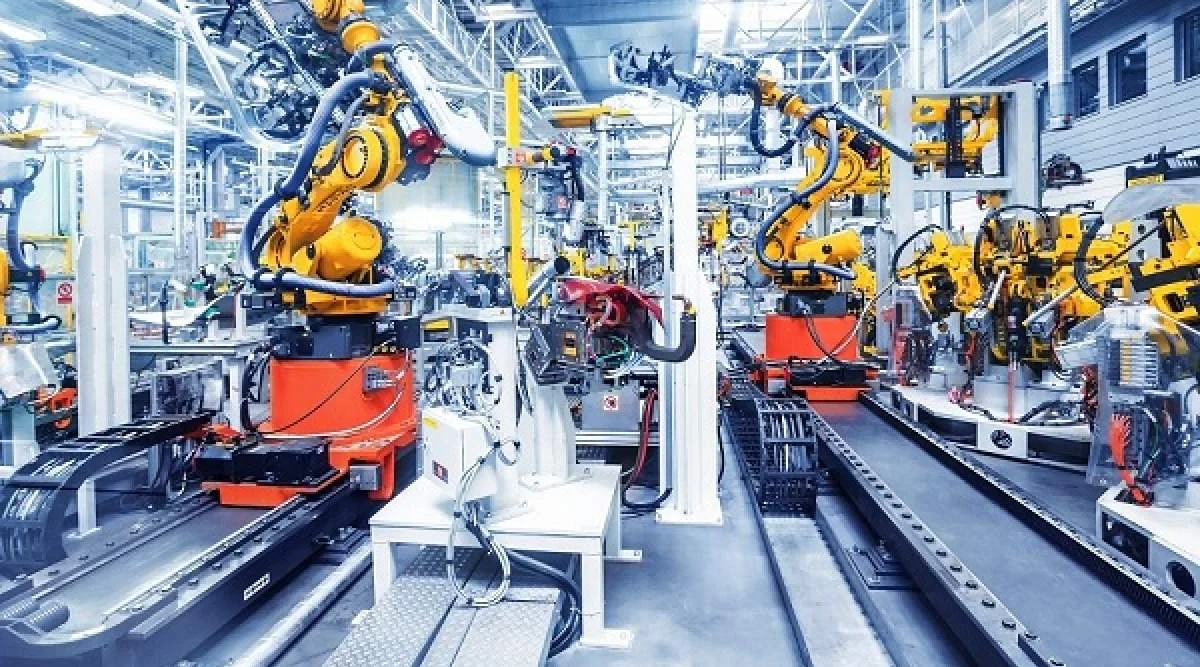
A modern smart factory may contain thousands of connected assets—from programmable logic controllers (PLCs) and industrial robots to smart sensors and remote operator workstations. Every connected device represents a potential attack surface. Cybercriminals understand this reality and increasingly target operational technology (OT) environments because disruption can lead to production losses, safety incidents, and significant financial consequences.
Traditional perimeter-based cybersecurity is no longer sufficient. Once an attacker breaches the network perimeter, they can often move laterally through inadequately segmented industrial networks. This is where Zero Trust Security becomes essential.
Rather than assuming users or devices inside the network are trustworthy, Zero Trust follows one fundamental principle:
Never trust. Always verify.
This approach continuously authenticates users, devices, applications, and communications before granting access to industrial systems. For organizations adopting Industry 4.0, Zero Trust has become one of the most effective cybersecurity strategies for protecting connected manufacturing environments.
What Is Zero Trust Security?
Zero Trust Security is a cybersecurity framework that assumes no user, device, application, or network connection should be trusted automatically—even if it originates from inside the corporate network.
Instead of granting broad network access after a single authentication event, Zero Trust continuously evaluates every access request based on factors such as:
User identity
Device health
Authentication status
Network location
Application being accessed
Security policies
Risk level
Behavioral patterns
Access is granted only after these factors meet predefined security requirements. Unlike traditional security models, Zero Trust does not rely on a trusted internal network. Every connection must be verified, authorized, and monitored throughout the session. For industrial organizations, this significantly reduces the likelihood of unauthorized access and limits the impact of compromised accounts or devices.
Why IIoT and Smart Factories Need Zero Trust
Modern manufacturing facilities have evolved into highly connected digital ecosystems. Equipment that once operated in isolation now communicates with enterprise systems, cloud platforms, suppliers, and remote maintenance teams. While this connectivity improves operational efficiency, it also expands the cyberattack surface.
Several factors make IIoT environments particularly vulnerable:
Thousands of connected devices
Legacy industrial equipment with limited security features
Remote maintenance access
Cloud-connected production systems
Third-party vendor access
Converged IT and OT networks
Unlike traditional office networks, industrial environments prioritize continuous operation. Even a brief outage can result in lost production, damaged equipment, or safety risks. Because of this, cyber resilience has become just as important as physical reliability.
Expanding Attack Surface
A single smart factory may include:
PLCs
Distributed Control Systems (DCS)
SCADA servers
Industrial gateways
Edge computing devices
Smart cameras
RFID systems
Wireless sensors
Autonomous mobile robots (AMRs)
Each connected endpoint introduces another opportunity for attackers. Without proper authentication and segmentation, a compromised device can become an entry point into critical production systems.
Increasing Sophistication of Cyber Threats
Industrial organizations face a growing range of cyber threats, including:
Ransomware
Credential theft
Supply chain attacks
Insider threats
Malware targeting OT systems
Unauthorized remote access
Industrial espionage
Many recent attacks have demonstrated that operational technology is no longer immune from sophisticated cyber campaigns.
Core Principles of Zero Trust Architecture
Zero Trust is not a single product. It is a security strategy built upon several foundational principles.
Verify Every User and Device
Every user requesting access must authenticate using strong identity verification.
Common methods include:
Multi-factor authentication (MFA)
Single Sign-On (SSO)
Certificate-based authentication
Hardware security keys
Biometric authentication
Similarly, devices must prove they comply with organizational security requirements before being allowed onto the network.
Least Privilege Access
Users should receive only the minimum permissions required to perform their jobs.
For example:
Operators should not have administrator privileges.
Contractors should only access systems related to their projects.
Vendors should receive temporary access limited to maintenance windows.
Restricting privileges significantly reduces opportunities for attackers to move laterally through the network.
Microsegmentation
Rather than treating the factory as one large network, Zero Trust divides it into smaller secure zones.
Examples include:
Production cells
Packaging systems
Robotics networks
Quality inspection stations
Building management systems
If one segment becomes compromised, attackers cannot freely move into other areas.
Continuous Monitoring
Authentication does not end after login.
Zero Trust continuously evaluates:
User behavior
Device activity
Network traffic
Access requests
Security posture
Suspicious behavior triggers automated responses such as session termination or additional authentication.
Assume Breach
Zero Trust assumes attackers may already be inside the network.
Instead of focusing solely on prevention, organizations prepare to:
Detect attacks quickly
Limit damage
Contain compromised systems
Recover rapidly
Zero Trust Components in Smart Factories
Implementing Zero Trust requires several technologies working together.
Identity and Access Management (IAM)
IAM solutions manage digital identities throughout the organization.
Capabilities include:
User authentication
Role-based access control
Password management
Privileged access management
Identity lifecycle management
These systems ensure only authorized personnel access industrial assets.
Network Segmentation
Industrial networks should separate:
Enterprise IT
Operational Technology (OT)
Safety systems
Engineering workstations
Guest networks
Vendor access
Segmentation limits the spread of cyber incidents.
Endpoint Security
Every connected endpoint requires protection.
This includes:
Industrial PCs
HMIs
PLC engineering laptops
Mobile maintenance devices
Edge gateways
IIoT sensors
Modern endpoint protection includes:
Antivirus
Endpoint Detection and Response (EDR)
Device encryption
Application control
Secure Remote Access
Remote maintenance has become standard practice.
Instead of traditional VPNs, Zero Trust favors:
Identity-based access
Time-limited sessions
Session recording
Just-in-Time (JIT) access
Device verification
These controls greatly reduce risks associated with third-party connectivity.
Security Analytics
Artificial intelligence increasingly assists cybersecurity teams.
Security analytics platforms can identify:
Abnormal user behavior
Unexpected device communication
Suspicious login attempts
Malware indicators
Data exfiltration
Machine learning improves detection speed while reducing false alarms.
Implementing Zero Trust in IIoT Environments
Organizations should adopt Zero Trust gradually rather than attempting a complete infrastructure overhaul.
Step 1: Inventory All Assets
Begin by identifying:
PLCs
RTUs
Sensors
Industrial switches
Servers
HMIs
Engineering workstations
Industrial gateways
You cannot secure assets that remain unknown.
Step 2: Classify Critical Systems
Not every asset carries equal importance.
Classify systems based on:
Safety impact
Production impact
Regulatory requirements
Business criticality
Critical assets should receive the highest protection.
Step 3: Strengthen Identity Management
Require:
Multi-factor authentication
Strong passwords
Certificate-based authentication
Centralized identity management
Identity should become the primary security boundary.
Step 4: Segment Industrial Networks
Separate production systems into logical zones.
Examples include:
Utilities
Process control
Packaging
Warehouse automation
Robotics
Segmentation prevents attackers from reaching critical systems.
Step 5: Monitor Continuously
Deploy monitoring tools that analyze:
User activity
Device health
Network traffic
Security events
Continuous visibility enables faster incident response.
Benefits of Zero Trust for Smart Factories
Organizations implementing Zero Trust often experience significant improvements beyond cybersecurity.
Reduced Cyber Risk
Continuous verification minimizes unauthorized access.
Better Regulatory Compliance
Zero Trust supports compliance with industrial cybersecurity standards such as:
IEC 62443
NIST Cybersecurity Framework
ISO/IEC 27001
NIS2 Directive (where applicable)
Improved Operational Resilience
Segmentation prevents isolated incidents from disrupting entire facilities.
Safer Remote Operations
Secure remote maintenance allows vendors and engineers to support equipment without exposing critical infrastructure.
Greater Visibility
Organizations gain a complete understanding of:
Connected devices
User access
System communications
Security events
This visibility improves both cybersecurity and operational decision-making.
Common Challenges
Although highly effective, Zero Trust implementation presents several challenges.
Legacy Equipment
Older industrial devices often lack:
Modern authentication
Encryption
Secure firmware
Identity management
Additional security layers may be necessary.
Operational Downtime Concerns
Manufacturers hesitate to modify production networks because downtime can be costly. Successful implementations use phased deployment strategies that minimize operational disruption.
Complexity
Large factories may contain:
Thousands of devices
Multiple vendors
Diverse protocols
Decades of legacy infrastructure
Careful planning is essential.
Skills Gap
Industrial cybersecurity requires expertise across both IT and OT disciplines. Organizations increasingly invest in cross-functional training to bridge this gap.
Best Practices for Zero Trust in Industrial Automation
Successful deployments typically follow these recommendations:
Implement multi-factor authentication across all privileged accounts.
Enforce least-privilege access for employees, contractors, and vendors.
Segment industrial networks using ISA/IEC 62443 security zones and conduits.
Maintain a complete inventory of all IIoT and OT assets.
Patch and update systems according to validated maintenance schedules.
Monitor network traffic continuously with industrial intrusion detection solutions.
Encrypt communications between critical systems whenever supported.
Regularly test incident response and disaster recovery plans.
Conduct periodic security assessments and penetration testing.
Provide cybersecurity awareness training for both IT and OT personnel.
The Future of Zero Trust in Industry 4.0
As Industry 4.0 technologies continue to evolve, Zero Trust will become even more important.
Emerging trends include:
AI-assisted threat detection
Autonomous security response
Identity-based machine authentication
Zero Trust Edge architectures
Secure industrial digital twins
Quantum-resistant encryption
Unified IT/OT security operations
Factories of the future will rely on continuous verification, intelligent analytics, and adaptive security policies rather than traditional perimeter defenses.
Organizations that begin implementing Zero Trust today will be better positioned to protect increasingly connected industrial environments while supporting innovation and digital transformation.
- Industrial Automation Fundamentals
- Industrial Communication Protocols
- Industrial Instrumentation Control
- Industrial Sensors & Measurement
- Motion and Process Control
- PLC Programming & Controllers
- SCADA and DCS Systems
- Servo Motors and Motor Drives
Frequently Asked Questions (FAQ)
What is Zero Trust Security?
Zero Trust Security is a cybersecurity model that continuously verifies every user, device, application, and network connection before granting or maintaining access. It operates on the principle of “Never trust, always verify.”
Why is Zero Trust important for IIoT?
IIoT environments contain thousands of connected devices that expand the attack surface. Zero Trust reduces cyber risk by requiring continuous authentication, enforcing least-privilege access, and limiting lateral movement through network segmentation.
How does Zero Trust differ from traditional network security?
Traditional security assumes devices inside the network are trustworthy after authentication. Zero Trust assumes no implicit trust, continuously validating users, devices, and activities regardless of their location.
Can Zero Trust be implemented in existing manufacturing plants?
Yes. Most organizations adopt Zero Trust incrementally by first identifying critical assets, strengthening identity management, segmenting networks, and implementing continuous monitoring without replacing existing production systems.
Does Zero Trust replace firewalls?
No. Firewalls remain an important security control, but Zero Trust complements them by adding identity verification, least-privilege access, device validation, and continuous monitoring to create multiple layers of defense.
Which industries benefit most from Zero Trust?
Industries with highly connected operational technology environments—including manufacturing, automotive, pharmaceuticals, food and beverage, energy, water treatment, mining, oil and gas, and logistics—can significantly improve their cybersecurity posture through Zero Trust adoption.
As industrial operations become more connected, cybersecurity must evolve alongside them. Zero Trust Security offers a practical and resilient framework for protecting IIoT devices, operational technology networks, and smart factory infrastructure against increasingly sophisticated threats. By combining identity-centric security, network segmentation, continuous monitoring, and least-privilege access, manufacturers can reduce cyber risk while maintaining the reliability and productivity that modern industry demands.
Implementing Zero Trust is not a one-time project but an ongoing strategy. Organizations that take a phased, risk-based approach will be better equipped to secure their digital transformation initiatives and build resilient, future-ready manufacturing environments.
Check Our Comprehensive Automation Brands Get Latest Industrial Automation News
Leave a Reply