How does IIoT improve predictive maintenance? and What technologies are commonly used in IIoT?
Benefits of IIoT in Manufacturing: How the Industrial Internet of Things Is Transforming Modern Factories
The manufacturing industry is undergoing a profound transformation. Traditional production facilities that once relied on isolated machines and manual data collection are evolving into highly connected, intelligent, and data-driven operations. At the center of this transformation is the Industrial Internet of Things (IIoT)—a technology that is reshaping how manufacturers monitor equipment, optimize production, improve quality, and make business decisions.
Unlike consumer IoT devices, which connect everyday products such as smart thermostats or wearable fitness trackers, IIoT focuses on industrial environments where reliability, safety, and operational efficiency are paramount. It connects machines, sensors, programmable logic controllers (PLCs), robots, and enterprise software, enabling real-time communication across the entire production ecosystem.
Manufacturers that successfully implement IIoT gain more than just visibility into their operations. They unlock predictive maintenance, reduce unplanned downtime, increase productivity, improve product quality, lower operating costs, and create safer workplaces. As Industry 4.0 continues to mature, IIoT is becoming one of the most valuable investments manufacturers can make to remain competitive in a rapidly changing global market.
In this comprehensive guide, we’ll explore the major benefits of IIoT in manufacturing, how it works, practical applications across different industries, implementation challenges, and best practices for a successful deployment.
What Is the Industrial Internet of Things (IIoT)?
The Industrial Internet of Things (IIoT) refers to a network of connected industrial devices, machines, sensors, controllers, and software applications that collect, exchange, and analyze operational data in real time.
Unlike conventional automation systems that often operate independently, IIoT creates a connected environment where information flows seamlessly between equipment, manufacturing execution systems (MES), supervisory control and data acquisition (SCADA) platforms, enterprise resource planning (ERP) systems, and cloud-based analytics tools.
An IIoT ecosystem typically includes:
Smart sensors
Industrial gateways
PLCs
SCADA systems
Edge computing devices
Industrial communication networks
Cloud platforms
Artificial Intelligence (AI)
Machine learning algorithms
Together, these technologies transform raw production data into actionable insights that help manufacturers optimize every stage of production.
How IIoT Works in Manufacturing
Understanding the benefits of IIoT begins with understanding how the technology operates within a manufacturing facility.
Smart Sensors Collect Operational Data
Industrial sensors continuously measure variables such as:
Temperature
Pressure
Vibration
Humidity
Flow rate
Machine speed
Electrical current
Energy consumption
Unlike traditional sensors that only provide local monitoring, IIoT-enabled sensors transmit data continuously across the manufacturing network.
Communication Networks Connect Equipment
Collected data travels through industrial communication protocols such as:
Ethernet/IP
PROFINET
Modbus TCP
OPC UA
MQTT
These protocols ensure reliable communication between machines, controllers, and software platforms.
Edge Computing Processes Data
Instead of sending every piece of information directly to the cloud, edge devices analyze critical data close to the production equipment. This reduces latency while enabling faster decision-making.
Cloud Platforms Deliver Business Intelligence
Manufacturers can visualize production metrics through dashboards that display:
Equipment performance
Machine utilization
Downtime trends
Maintenance schedules
Quality metrics
Energy consumption
These insights help management make informed operational decisions.
Improved Operational Visibility
One of the most significant advantages of IIoT is complete visibility into manufacturing operations. Traditional factories often rely on manual inspections and periodic reporting. By contrast, IIoT continuously monitors every connected asset in real time.
Plant managers can instantly view:
Machine status
Production throughput
Equipment health
Process efficiency
Inventory movement
Instead of reacting to problems after production has stopped, operators receive immediate alerts when abnormal conditions occur. This transparency enables proactive decision-making throughout the facility.
Predictive Maintenance Reduces Downtime
Unexpected equipment failures remain one of the largest expenses in manufacturing. Traditional maintenance strategies generally fall into two categories:
Reactive maintenance
Preventive maintenance
IIoT introduces a third approach: predictive maintenance.
How Predictive Maintenance Works
Smart sensors monitor:
Bearing vibration
Motor temperature
Oil condition
Pump pressure
Electrical current
Machine learning algorithms identify abnormal operating patterns before failures occur. Maintenance teams receive alerts indicating exactly when maintenance should be scheduled.
This approach significantly reduces:
Emergency repairs
Spare parts inventory
Production interruptions
Rather than replacing components on a fixed schedule, manufacturers replace parts based on actual equipment condition.
Higher Production Efficiency
IIoT enables manufacturers to continuously optimize production processes. Real-time production monitoring helps identify:
Equipment bottlenecks
Idle machines
Slow cycle times
Excessive setup times
Material shortages
Managers can quickly adjust production schedules and allocate resources more efficiently.
As a result:
Overall Equipment Effectiveness (OEE) improves.
Throughput increases.
Production waste decreases.
Continuous visibility allows factories to achieve consistently higher output without significantly increasing labor or equipment costs.
Better Product Quality
Quality issues often originate from small process variations that go unnoticed until products fail inspection. IIoT continuously monitors manufacturing conditions throughout production.
Examples include:
Injection molding temperature
Welding current
Mixing pressure
Conveyor speed
Oven temperature
If process variables drift outside acceptable limits, operators receive immediate notifications. Some systems automatically correct process parameters before defective products are produced.
This leads to:
Lower scrap rates
Reduced rework
Consistent product quality
Higher customer satisfaction
Reduced Manufacturing Costs
Although implementing IIoT requires upfront investment, long-term savings often outweigh the initial costs. Manufacturers reduce expenses by:
Minimizing downtime
Lowering maintenance costs
Reducing energy consumption
Improving production planning
Optimizing inventory
Decreasing product defects
Many manufacturers achieve measurable returns on investment within the first few years of implementation.
Improved Energy Management
Energy costs represent a major operating expense for many manufacturing facilities. IIoT helps optimize energy usage by monitoring:
Electricity consumption
Compressed air systems
Steam generation
Water usage
HVAC performance
Manufacturers can identify inefficient equipment and eliminate unnecessary energy consumption. This not only reduces utility costs but also supports corporate sustainability initiatives.
Enhanced Worker Safety
Manufacturing environments often expose employees to hazardous conditions. IIoT improves workplace safety through:
Gas leak detection
Machine safety monitoring
Wearable safety devices
Environmental monitoring
Emergency alert systems
Real-time monitoring helps prevent accidents before they occur. Additionally, connected safety systems automatically shut down equipment when dangerous operating conditions develop.
Faster Decision-Making Through Real-Time Data
Historically, manufacturers relied on daily or weekly reports. IIoT changes this dramatically.
Managers now access live dashboards showing:
Production output
Downtime
Equipment utilization
Quality metrics
Inventory levels
Instead of waiting for reports, production teams can respond immediately to changing conditions. Faster decisions lead to greater operational agility.
Improved Supply Chain Visibility
IIoT extends beyond the factory floor. Connected inventory systems track:
Raw materials
Work-in-progress inventory
Finished products
Shipping containers
Manufacturers gain greater visibility into supply chain operations, reducing shortages while improving inventory planning.
Data-Driven Continuous Improvement
One of IIoT’s greatest strengths is its ability to support continuous improvement initiatives. Manufacturers can analyze historical production data to identify recurring inefficiencies. This information supports:
Lean Manufacturing
Six Sigma
Kaizen
Root Cause Analysis
Overall Equipment Effectiveness (OEE)
Instead of relying on assumptions, improvement projects become data-driven.
Industries Benefiting from IIoT
IIoT is transforming nearly every industrial sector. Major industries include:
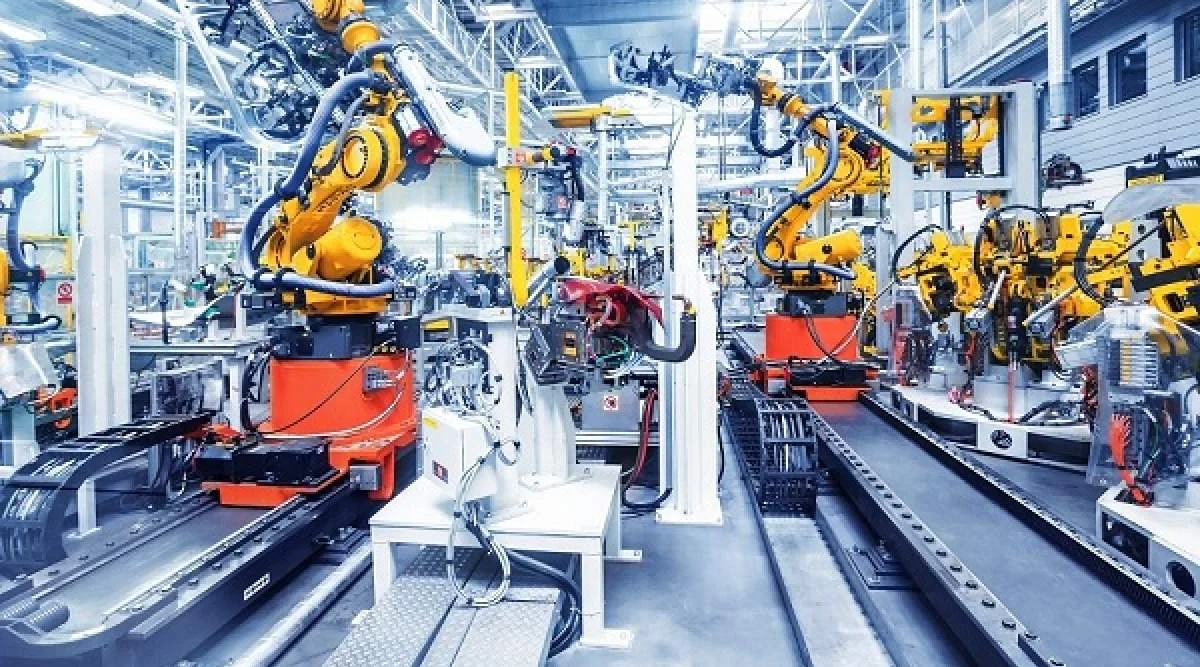
Automotive Manufacturing
Robotic assembly
Predictive maintenance
Automated quality inspection
Food and Beverage
Temperature monitoring
Traceability
Equipment sanitation
Pharmaceutical Manufacturing
Regulatory compliance
Batch monitoring
Environmental control
Oil and Gas
Pipeline monitoring
Remote asset management
Leak detection
Chemical Processing
Process optimization
Safety monitoring
Asset reliability
Power Generation
Turbine monitoring
Grid optimization
Predictive maintenance
Challenges of IIoT Implementation
Although IIoT offers significant benefits, manufacturers should address several implementation challenges.
Cybersecurity
Connected devices increase the attack surface for cyber threats. Strong cybersecurity measures are essential.
Legacy Equipment Integration
Many factories still operate equipment that predates modern networking technologies. Industrial gateways often bridge the gap between legacy machines and IIoT platforms.
Workforce Skills
Employees need training in:
Data analytics
Industrial networking
Cybersecurity
Smart manufacturing technologies
Data Management
Large manufacturing facilities generate enormous amounts of data. Proper storage, filtering, and analysis are essential to maximize IIoT value.
Best Practices for Successful IIoT Adoption
Successful IIoT projects usually begin with clearly defined business objectives. Recommended best practices include:
Start with a pilot project.
Define measurable KPIs.
Prioritize cybersecurity.
Standardize communication protocols.
Invest in employee training.
Continuously monitor system performance.
Scale gradually across production facilities.
The Future of IIoT in Manufacturing
IIoT continues to evolve alongside Artificial Intelligence, Digital Twins, 5G connectivity, and Edge Computing. Future manufacturing facilities will become increasingly autonomous. Machines will not only report problems but also recommend corrective actions—and in many cases, implement those actions automatically. As these technologies mature, manufacturers will achieve even greater levels of efficiency, sustainability, and operational resilience.
Recommended Related Articles
- Industrial Automation Fundamentals
- Industrial Communication Protocols
- Industrial Instrumentation Control
- Industrial Networking & IIoT
- Industrial Sensors & Measurement
- Motion and Process Control
- PLC Programming & Controllers
- SCADA and DCS Systems
- Servo Motors and Motor Drives
Frequently Asked Questions (FAQ)
What is IIoT in manufacturing?
The Industrial Internet of Things (IIoT) is a network of connected industrial devices, sensors, machines, and software that collect and exchange real-time data to improve manufacturing efficiency, productivity, and decision-making.
What are the biggest benefits of IIoT?
The most significant benefits include predictive maintenance, reduced downtime, improved operational visibility, higher product quality, lower operating costs, enhanced worker safety, and better energy efficiency.
How does IIoT improve predictive maintenance?
IIoT continuously monitors equipment condition using smart sensors. By analyzing vibration, temperature, pressure, and other performance indicators, the system can detect early signs of equipment failure and recommend maintenance before a breakdown occurs.
Is IIoT only suitable for large manufacturers?
No. Small and medium-sized manufacturers can also benefit from IIoT. Many organizations begin with a limited pilot project—such as monitoring a critical production line—and expand their implementation as they realize measurable improvements in efficiency and cost savings.
What technologies are commonly used in IIoT?
Typical IIoT deployments include smart sensors, PLCs, SCADA systems, industrial gateways, edge computing devices, cloud platforms, industrial communication protocols, artificial intelligence, and machine learning.
How does IIoT support Industry 4.0?
IIoT is a foundational technology of Industry 4.0. It enables machines, software, and enterprise systems to communicate in real time, creating connected, intelligent factories that can optimize production, improve quality, and make data-driven decisions with minimal manual intervention.
Leave a Reply