Can a company implement IIoT without Industry 4.0? And what communication protocols are commonly used in IIoT?
Industry 4.0 vs IIoT: Are They the Same? Understanding the Key Differences and How They Work Together
The manufacturing industry is undergoing one of the most significant transformations since the Industrial Revolution. Digital technologies, intelligent machines, and connected systems are reshaping how factories operate, helping manufacturers increase productivity, improve product quality, reduce downtime, and make faster data-driven decisions.
Among the most frequently discussed technologies are Industry 4.0 and the Industrial Internet of Things (IIoT). While these terms are often used interchangeably, they are not the same. Although they are closely related and complement one another, they represent different concepts within modern industrial automation.
Understanding the distinction is essential for engineers, plant managers, maintenance professionals, and business leaders planning digital transformation initiatives. Choosing the right technologies—and understanding how they fit together—can determine whether an automation project delivers measurable business value or falls short of expectations.
In this guide, we’ll explore what Industry 4.0 and IIoT mean, how they differ, where they overlap, their benefits, challenges, real-world applications, and how organizations can successfully implement both technologies.
What Is Industry 4.0?
Industry 4.0, often referred to as the Fourth Industrial Revolution, is a comprehensive approach to modern manufacturing that integrates digital technologies across the entire industrial value chain.
Unlike previous industrial revolutions, Industry 4.0 is not defined by a single technology. Instead, it combines multiple innovations into an intelligent, connected manufacturing ecosystem capable of making autonomous decisions, optimizing operations, and continuously improving performance.
Industry 4.0 connects machines, software, people, and business systems to create highly efficient, data-driven production environments.
The Four Industrial Revolutions
Understanding Industry 4.0 becomes easier when viewed in historical context.
The First Industrial Revolution
Mechanization through steam power transformed manual production into machine-assisted manufacturing.
The Second Industrial Revolution
Electricity enabled mass production, assembly lines, and standardized manufacturing processes.
The Third Industrial Revolution
Computers, electronics, and programmable logic controllers (PLCs) introduced automation and digital control systems into industrial facilities.
The Fourth Industrial Revolution
Today’s revolution combines:
Artificial Intelligence (AI)
Machine Learning
Cloud Computing
Industrial Internet of Things (IIoT)
Robotics
Big Data Analytics
Edge Computing
Digital Twins
Cybersecurity
Autonomous Systems
Rather than existing as isolated technologies, these innovations work together to create intelligent manufacturing environments.
What Is the Industrial Internet of Things (IIoT)?
The Industrial Internet of Things (IIoT) refers specifically to the network of connected industrial devices that collect, exchange, and analyze operational data. IIoT focuses on connecting physical assets such as:
Industrial sensors
PLCs
Variable Frequency Drives (VFDs)
Industrial robots
Pumps
Compressors
Motors
Pressure transmitters
Flow meters
Control valves
These connected devices communicate over industrial networks using protocols such as Ethernet/IP, PROFINET, Modbus TCP, MQTT, and OPC UA. Unlike consumer IoT devices such as smart thermostats or wearable fitness trackers, IIoT systems are designed for mission-critical industrial environments where reliability, accuracy, and cybersecurity are paramount.
How IIoT Works
A typical IIoT system consists of several layers:
Smart Sensors
Industrial sensors continuously measure variables such as:
Pressure
Temperature
Flow
Vibration
Humidity
Speed
Voltage
Current
Industrial Controllers
PLCs collect sensor data and control equipment based on programmed logic.
Communication Networks
Industrial Ethernet and wireless networks transmit data securely between devices.
Edge Computing
Edge devices process data locally, enabling faster decisions without relying entirely on cloud infrastructure.
Cloud Platforms
Cloud systems store operational data, generate reports, and support advanced analytics.
Analytics and AI
Artificial intelligence identifies patterns, predicts equipment failures, and recommends operational improvements.
Industry 4.0 vs IIoT: What Is the Difference?
Although Industry 4.0 and IIoT are closely related, they are not interchangeable. The simplest way to understand the relationship is this:
IIoT is one of the core enabling technologies that makes Industry 4.0 possible.
Think of Industry 4.0 as the complete digital transformation strategy, while IIoT provides the connected data needed to power that strategy.
| Feature | Industry 4.0 | IIoT |
|---|---|---|
| Primary Focus | Complete digital transformation | Connected industrial devices |
| Scope | Enterprise-wide | Operational technology (OT) |
| Includes | AI, robotics, cloud, digital twins, analytics, IIoT | Sensors, gateways, industrial communications |
| Goal | Intelligent manufacturing | Data collection and connectivity |
| Users | Entire organization | Operations and maintenance teams |
Industry 4.0 addresses the broader vision of smart manufacturing, whereas IIoT focuses on collecting real-time operational data from industrial equipment.
How Industry 4.0 and IIoT Work Together
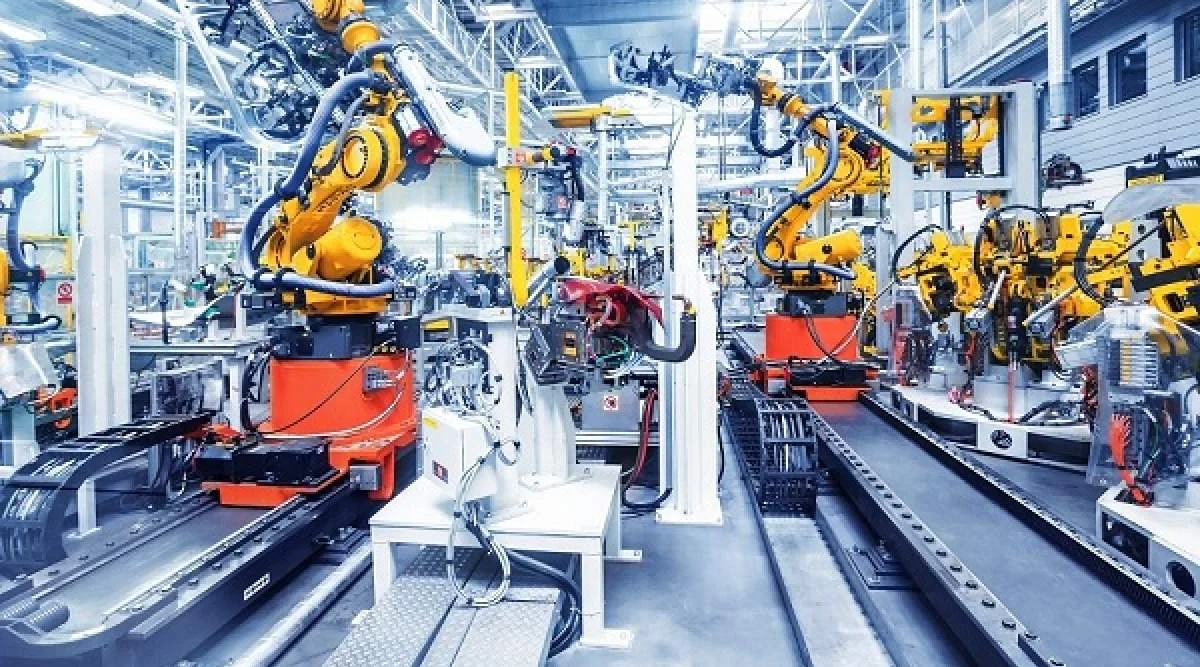
Instead of competing technologies, Industry 4.0 and IIoT complement each other. Consider a modern automotive manufacturing plant.
IIoT devices collect information from:
Robotic welding stations
Conveyor motors
Hydraulic presses
Temperature sensors
Vibration monitors
Vision inspection systems
Industry 4.0 technologies then use this data to:
Predict equipment failures
Optimize production schedules
Improve product quality
Reduce energy consumption
Automatically reorder inventory
Generate digital twins
Support autonomous manufacturing
Without IIoT, Industry 4.0 lacks the real-time operational data required for intelligent decision-making.
Key Technologies That Power Industry 4.0
Artificial Intelligence
AI enables machines to recognize patterns, detect anomalies, and recommend process improvements. Applications include:
Predictive maintenance
Visual inspection
Process optimization
Quality assurance
Digital Twins
Digital twins are virtual replicas of physical equipment or production systems. Manufacturers use them to:
Simulate production changes
Test maintenance strategies
Optimize factory layouts
Reduce commissioning time
Robotics and Collaborative Robots
Modern robots perform repetitive, hazardous, and precision tasks while collaborating safely with human workers. Collaborative robots (cobots) improve productivity without replacing skilled personnel.
Cloud Computing
Cloud platforms centralize production data, making it accessible across multiple facilities and enabling enterprise-wide analytics.
Big Data Analytics
Industrial facilities generate millions of data points every day. Analytics platforms convert this information into actionable insights for operations, maintenance, quality control, and management.
Benefits of IIoT
Organizations implementing IIoT often experience measurable improvements across operations.
Predictive Maintenance
Connected sensors detect abnormal vibration, temperature, and pressure long before equipment fails. Maintenance teams can schedule repairs proactively, reducing costly downtime.
Real-Time Equipment Monitoring
Engineers gain continuous visibility into machine health, allowing faster responses to operational issues.
Improved Asset Utilization
Equipment performance can be optimized through continuous monitoring and analysis.
Lower Maintenance Costs
Instead of replacing parts on fixed schedules, maintenance becomes condition-based.
Benefits of Industry 4.0
Industry 4.0 extends beyond equipment connectivity to improve the entire manufacturing ecosystem. Benefits include:
Increased production efficiency
Higher product quality
Reduced operational costs
Greater supply chain visibility
Faster decision-making
Enhanced customer responsiveness
Improved workforce productivity
Better sustainability through optimized energy use
These advantages help manufacturers remain competitive in increasingly dynamic global markets.
Common Applications Across Industries
Automotive Manufacturing
Manufacturers use IIoT sensors to monitor robotic welding systems while Industry 4.0 platforms optimize production scheduling and quality control.
Oil and Gas
Connected sensors monitor pipelines, compressors, pumps, and storage tanks. AI-powered analytics predict failures before they cause production interruptions.
Food and Beverage
Automated production lines monitor temperature, packaging quality, and sanitation compliance in real time.
Pharmaceuticals
Connected manufacturing systems ensure product traceability while maintaining strict regulatory compliance.
Power Generation
Utilities monitor turbines, transformers, and generators using IIoT while Industry 4.0 analytics optimize maintenance planning.
Challenges of Implementing Industry 4.0 and IIoT
Digital transformation also introduces challenges that organizations must address.
Cybersecurity
As more devices become connected, industrial networks face increased cyber threats.
Manufacturers should implement:
Network segmentation
Secure authentication
Encryption
Continuous monitoring
Security updates
Legacy Equipment
Many industrial facilities operate equipment that is decades old. Fortunately, retrofit sensors and industrial gateways often allow older machines to participate in modern IIoT systems.
Skills Gap
Successful implementation requires expertise in:
Industrial automation
Networking
Data analytics
Cybersecurity
Cloud computing
Training and workforce development are essential.
Integration Complexity
Connecting multiple vendors’ equipment into one intelligent ecosystem requires careful planning and standardized communication protocols.
How to Get Started with Industry 4.0
Organizations beginning their digital transformation should avoid trying to modernize everything at once.
A practical roadmap includes:
Assess current automation maturity.
Identify high-value business problems.
Connect critical assets using IIoT sensors.
Build secure industrial communication networks.
Implement data visualization dashboards.
Introduce predictive maintenance.
Expand AI and analytics capabilities.
Scale successful projects across the organization.
This phased approach reduces risk while delivering measurable business value.
Recommended Related Articles
- Industrial Automation Fundamentals
- Industrial Communication Protocols
- Industrial Instrumentation Control
- Industrial Networking & IIoT
- Industrial Sensors & Measurement
- Motion and Process Control
- PLC Programming & Controllers
- SCADA and DCS Systems
- Servo Motors and Motor Drives
Frequently Asked Questions
Is Industry 4.0 the same as IIoT?
No. IIoT is a foundational technology within Industry 4.0. IIoT connects industrial devices and collects data, while Industry 4.0 uses that data alongside AI, cloud computing, robotics, and analytics to create intelligent manufacturing systems.
Can a company implement IIoT without Industry 4.0?
Yes. Many organizations begin by deploying IIoT sensors for equipment monitoring and predictive maintenance before adopting a broader Industry 4.0 strategy.
What technologies are part of Industry 4.0?
Industry 4.0 includes IIoT, artificial intelligence, machine learning, robotics, cloud computing, edge computing, digital twins, cybersecurity, additive manufacturing, and big data analytics.
What industries benefit most from Industry 4.0?
Automotive, aerospace, oil and gas, food and beverage, pharmaceuticals, mining, logistics, semiconductor manufacturing, utilities, and chemical processing all benefit significantly from Industry 4.0 technologies.
Why is IIoT important for predictive maintenance?
IIoT devices continuously collect operational data such as vibration, temperature, pressure, and current consumption. Analytics platforms use this information to identify abnormal conditions before equipment fails, allowing maintenance teams to act proactively.
What communication protocols are commonly used in IIoT?
Common industrial communication protocols include OPC UA, MQTT, Modbus TCP, PROFINET, EtherNet/IP, EtherCAT, and IO-Link. The appropriate choice depends on application requirements, interoperability needs, and existing infrastructure.
Industry 4.0 and the Industrial Internet of Things are closely connected, but they serve different purposes. IIoT focuses on connecting industrial assets and generating real-time operational data, while Industry 4.0 provides the broader digital transformation framework that turns that data into business value through intelligent automation, analytics, and enterprise integration.
Rather than viewing them as competing technologies, manufacturers should see them as complementary building blocks. IIoT creates the digital foundation by connecting machines and processes, while Industry 4.0 leverages that foundation to enable predictive maintenance, autonomous decision-making, digital twins, and smart manufacturing.
As manufacturing continues to evolve, organizations that invest in both IIoT connectivity and a comprehensive Industry 4.0 strategy will be better positioned to improve productivity, increase operational resilience, reduce costs, and remain competitive in an increasingly data-driven industrial landscape.
Check Our Comprehensive Automation Brands Get Latest Industrial Automation News
Leave a Reply