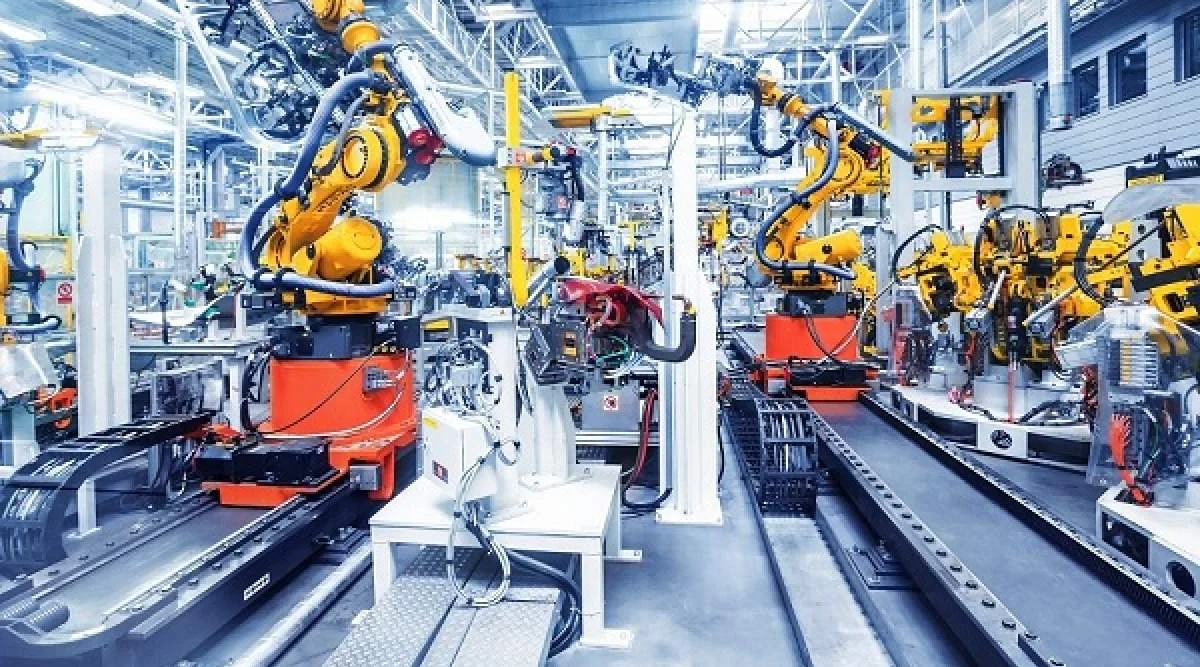
Start with Clearly Defined IIoT Business Goals, Build on Existing Automation Infrastructure and Standardize Communication Protocols
Part 5: Industrial Internet of Things (IIoT) Guide: Complete 2026 Handbook
IIoT Implementation Best Practices
Implementing the Industrial Internet of Things successfully requires more than installing sensors or connecting machines to the cloud. Organizations that achieve measurable returns typically follow a well-defined strategy focused on business objectives, scalable architecture, cybersecurity, and workforce readiness.
The following best practices can help maximize the value of your IIoT investment while minimizing implementation risks.
Start with Clearly Defined Business Goals
Every IIoT project should begin by identifying the business problem you want to solve. Rather than implementing technology simply because it is available, define measurable objectives such as:
- Reducing unplanned downtime by 20%
- Improving Overall Equipment Effectiveness (OEE)
- Lowering maintenance costs
- Increasing production throughput
- Improving product quality
- Reducing energy consumption
- Enhancing worker safety
Establishing clear Key Performance Indicators (KPIs) makes it easier to evaluate project success and demonstrate return on investment.
Build on Existing Automation Infrastructure
Many industrial facilities already have substantial investments in automation technologies, including PLCs, SCADA systems, DCS platforms, HMIs, industrial networks, and field instrumentation. Instead of replacing this infrastructure, integrate IIoT solutions with your existing systems whenever possible. Using industrial gateways, protocol converters, and open communication standards allows organizations to modernize operations while protecting previous investments.
Standardize Communication Protocols
Industrial environments often include equipment from multiple manufacturers installed over many years. Standardizing communication protocols improves interoperability and simplifies future expansion. Where practical, adopt widely supported industrial standards such as:
- OPC UA
- MQTT
- Modbus TCP
- EtherNet/IP
- PROFINET
Open standards reduce vendor lock-in while making it easier to integrate new equipment into existing production environments.
Prioritize Cybersecurity from Day One
Cybersecurity should never be treated as an afterthought. Every connected device represents a potential entry point into industrial networks. A comprehensive IIoT cybersecurity strategy should include:
- Network segmentation
- Role-based access control
- Multi-factor authentication
- Encryption of data in transit and at rest
- Regular firmware and software updates
- Continuous network monitoring
- Security awareness training for employees
- Incident response planning
Organizations should also conduct periodic security assessments to identify vulnerabilities before they can be exploited.
Focus on Data Quality
Industrial organizations often assume that collecting more data automatically leads to better decisions. In reality, poor-quality data can produce inaccurate analytics and misleading conclusions. Focus on collecting data that is:
- Accurate
- Consistent
- Relevant
- Time synchronized
- Properly validated
Clean, reliable data forms the foundation of successful Industrial IoT initiatives.
Invest in Workforce Development
Technology alone cannot transform an organization. Operators, maintenance personnel, engineers, and IT professionals must understand how to interpret IIoT data and incorporate it into daily decision-making. Providing ongoing training helps employees:
- Understand new technologies
- Improve troubleshooting skills
- Increase cybersecurity awareness
- Adapt to digital workflows
- Maximize the value of connected systems
Organizations that invest in employee development typically achieve faster IIoT adoption and stronger long-term results.
Common Mistakes to Avoid
Although IIoT offers tremendous opportunities, several common mistakes can delay projects or reduce their effectiveness.
Deploying Technology Without a Business Strategy
One of the most common errors is implementing IIoT simply because it is considered an industry trend. Technology should always support measurable business outcomes rather than becoming an objective in itself.
Attempting Large-Scale Deployments Too Quickly
Organizations sometimes attempt to connect every machine across multiple facilities simultaneously. Large-scale deployments increase complexity and project risk. Instead, begin with focused pilot projects, validate results, and expand gradually.
Ignoring Legacy Equipment
Older equipment often continues operating reliably for decades. Replacing functional machinery solely to enable IIoT connectivity is rarely cost-effective. Industrial gateways and protocol converters frequently provide a more economical solution.
Underestimating Cybersecurity
As operational technology becomes increasingly connected, cyber threats continue to evolve. Strong cybersecurity governance should accompany every phase of an IIoT implementation.
Collecting Data Without Using It
Industrial facilities generate enormous volumes of operational information. However, data creates value only when organizations convert it into actionable insights. Develop dashboards, analytics, and reporting systems that support operational improvements rather than simply storing information.
Industrial IoT applications span manufacturing, energy, utilities, logistics, pharmaceuticals, and process industries, enabling real-time monitoring and intelligent decision-making across diverse industrial environments.Recommended Related Articles
- Industrial Automation Fundamentals
- Industrial Communication Protocols
- Industrial Instrumentation Control
- Industrial Networking & IIoT
- Industrial Sensors & Measurement
- Motion and Process Control
- PLC Programming & Controllers
- SCADA and DCS Systems
- Servo Motors and Motor Drives
Frequently Asked Questions (FAQ)
What is the Industrial Internet of Things (IIoT)?
The Industrial Internet of Things (IIoT) is a network of connected industrial devices, machines, sensors, controllers, and software that collect, exchange, and analyze operational data to improve productivity, reliability, safety, and decision-making.
How is IIoT different from IoT?
While the Internet of Things (IoT) typically focuses on consumer devices such as smart home products and wearable technology, IIoT is designed specifically for industrial environments. It emphasizes reliability, real-time performance, cybersecurity, and integration with industrial control systems such as PLCs, SCADA, and DCS.
What industries benefit from IIoT?
IIoT is widely used across numerous industries, including:
- Manufacturing
- Oil and gas
- Chemical processing
- Food and beverage
- Pharmaceuticals
- Mining
- Power generation
- Water and wastewater treatment
- Logistics and warehousing
- Renewable energy
Each industry uses IIoT to improve operational efficiency, reduce downtime, and enhance asset performance.
What are the core components of an IIoT system?
A typical IIoT ecosystem includes:
- Smart sensors and field devices
- PLCs and industrial controllers
- Industrial communication networks
- IIoT gateways
- Edge computing devices
- Cloud platforms
- Data analytics software
- Artificial intelligence and machine learning applications
- Human-Machine Interfaces (HMIs)
- Enterprise systems such as MES and ERP
Together, these technologies enable real-time monitoring and intelligent decision-making.
What communication protocols are commonly used in IIoT?
Several industrial communication protocols support IIoT deployments, including:
- MQTT
- OPC UA
- Modbus TCP
- EtherNet/IP
- PROFINET
- Ethernet TCP/IP
The appropriate protocol depends on the application, existing infrastructure, and performance requirements.
What are the biggest benefits of IIoT?
Organizations implementing IIoT commonly experience:
- Reduced unplanned downtime
- Improved predictive maintenance
- Higher production efficiency
- Better product quality
- Lower maintenance costs
- Increased equipment availability
- Enhanced worker safety
- Improved energy efficiency
- Real-time operational visibility
- Faster business decision-making
Is IIoT secure?
IIoT can be highly secure when organizations implement strong cybersecurity practices such as network segmentation, encryption, access control, continuous monitoring, regular software updates, and employee cybersecurity training. Security should be integrated into every phase of an IIoT project rather than added later.
How does IIoT support Industry 4.0?
IIoT is one of the foundational technologies behind Industry 4.0. By connecting machines, collecting real-time data, and enabling advanced analytics, IIoT supports intelligent manufacturing, digital twins, predictive maintenance, autonomous production, and AI-driven decision-making.
The Industrial Internet of Things is no longer a vision for the future—it is a defining capability of modern industrial operations. By connecting machines, sensors, controllers, enterprise systems, and cloud platforms, IIoT transforms isolated production assets into intelligent, data-driven ecosystems capable of continuous improvement.
Organizations that adopt IIoT thoughtfully gain far more than enhanced visibility. They improve asset reliability, optimize maintenance, reduce operational costs, strengthen workplace safety, and make faster, more informed decisions based on real-time information.
The journey toward connected manufacturing does not require replacing every machine or rebuilding an entire facility. Instead, successful implementations typically begin with a clear business objective, a focused pilot project, and a scalable architecture that builds on existing automation investments.
As artificial intelligence, edge computing, digital twins, private 5G networks, and advanced analytics continue to mature, Industrial IoT will become even more central to smart manufacturing and Industry 4.0 initiatives. Companies that embrace these technologies today will be better positioned to improve resilience, drive innovation, and remain competitive in an increasingly connected industrial landscape.
Whether you are modernizing a single production line or planning a company-wide digital transformation, IIoT provides the foundation for safer, more efficient, and more intelligent industrial operations in 2026 and beyond.
Check Our Comprehensive Automation Brands Get Latest Industrial Automation News
Leave a Reply