
What industries commonly use Omron PLCs?, 4. Are Omron PLCs suitable for process automation? Which communication protocols do Omron PLCs support? And what is the difference between Omron compact and modular PLCs?
Top Industrial Applications of Omron PLCs Across Manufacturing, Transportation, Semiconductor, Food & Beverages, Packaging, Robotics & Process Automation
Omron PLCs are trusted across a wide range of industries because they combine high-speed control, reliable communications, and seamless integration with motion, vision, safety, and industrial networking technologies. From discrete manufacturing and packaging to robotics, food processing, and water treatment, Omron programmable logic controllers help improve productivity, product quality, and operational efficiency. This guide explores the most common industrial applications of Omron PLCs, the features that make them suitable for demanding environments, and best practices for selecting the right controller for your automation project.
Industrial automation continues to evolve at an unprecedented pace. Manufacturers today face increasing pressure to improve productivity, reduce downtime, enhance product quality, and remain competitive in a rapidly changing global marketplace. To meet these demands, organizations are investing in intelligent control systems capable of connecting machines, collecting real-time production data, and supporting increasingly sophisticated manufacturing processes.
Among the leading programmable logic controller (PLC) manufacturers, Omron has established a strong reputation for delivering reliable, scalable, and high-performance automation solutions. Whether controlling a high-speed packaging line, coordinating multi-axis robotic systems, or managing complex process automation applications, Omron PLCs provide the flexibility and performance needed for modern industrial operations.
This article examines the top industrial applications of Omron PLCs, explores the technologies that support these applications, and explains why Omron controllers have become a preferred choice across numerous industries.
Why Omron PLCs Are Widely Used in Industrial Automation
Programmable Logic Controllers serve as the central intelligence of industrial automation systems. They continuously receive signals from sensors, execute user-defined logic, and control machinery in real time.
Omron PLCs have gained widespread adoption because they combine high-speed processing with reliable communications and extensive integration capabilities. Their product portfolio ranges from compact controllers designed for standalone machines to advanced machine automation controllers capable of synchronizing motion control, vision inspection, robotics, and safety systems within a single architecture.
Several characteristics distinguish Omron PLCs from conventional industrial controllers.
High-Speed Processing Performance
Modern production lines require controllers capable of executing thousands of operations every second while maintaining deterministic performance.
Omron PLCs provide:
Fast instruction execution
High-speed data processing
Real-time machine synchronization
Precise motion control
These capabilities become particularly important in industries where milliseconds directly affect production throughput and product quality.
Integrated Motion Control
Rather than relying on separate controllers, many Omron PLC platforms integrate motion control directly into the PLC environment.
This enables manufacturers to coordinate:
Servo motors
Variable frequency drives
Conveyor systems
Pick-and-place equipment
Robotic positioning
The result is simplified system architecture and improved synchronization across the production line.
Advanced Industrial Networking
Modern factories depend on seamless communication between machines. Omron PLCs support industrial communication technologies such as:
EtherCAT
EtherNet/IP
OPC UA
Modbus TCP
Serial communication protocols
These communication capabilities allow controllers to exchange data with supervisory systems, industrial robots, HMIs, vision systems, and enterprise software.
Manufacturing Automation Applications
Manufacturing remains the largest application area for Omron PLCs. Today’s production environments demand precise coordination between machines, operators, and information systems. Omron controllers provide the flexibility needed to automate everything from simple assembly operations to fully integrated smart factories.
Assembly Line Automation
Modern assembly lines involve numerous automated processes operating simultaneously.
Typical applications include:
Component positioning
Automated fastening
Product inspection
Conveyor synchronization
Material transfer
Omron PLCs coordinate these operations while continuously monitoring sensors and equipment status.
Manufacturers benefit from:
Increased throughput
Reduced cycle times
Improved repeatability
Lower labor requirements
CNC and Machine Tool Control
Machine builders frequently integrate Omron PLCs into CNC equipment and precision machining systems.
Controllers manage:
Machine sequencing
Tool positioning
Safety interlocks
Coolant systems
Material handling
Reliable control helps improve machining accuracy while reducing production interruptions.
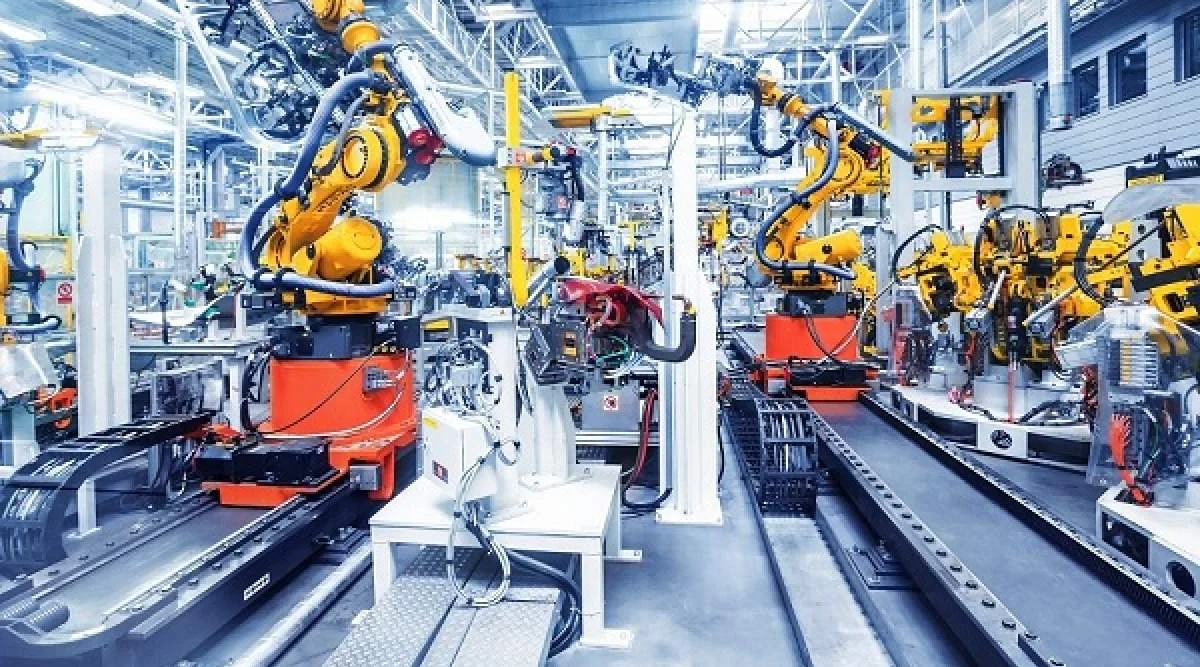
Automotive Manufacturing
Automotive production facilities rely heavily on programmable automation.
Omron PLCs support applications including:
Robotic welding
Paint systems
Body assembly
Powertrain production
Final vehicle assembly
Because automotive production demands extremely high reliability, PLC uptime is critical for maintaining production schedules.
Packaging and Material Handling Applications
Packaging equipment represents one of the fastest-growing markets for Omron PLC technology. Packaging systems require precise coordination between mechanical motion, sensors, printing systems, labeling equipment, and inspection cameras.
High-Speed Packaging Machines
Packaging machines often perform multiple operations simultaneously.
Examples include:
Filling
Sealing
Capping
Wrapping
Labeling
Coding
Omron PLCs synchronize these processes while maintaining precise timing between each station.
Conveyor System Control
Conveyor automation extends far beyond simply moving products.
Modern conveyor systems must:
Route products automatically
Detect jams
Track production
Coordinate diverters
Balance production flow
Omron PLCs continuously monitor conveyor sensors and adjust system operation in real time.
Warehouse Automation
Distribution centers increasingly depend on automated logistics.
Applications include:
Automated storage systems
Sortation equipment
Barcode readers
Pallet handling
Automated guided vehicles (AGVs)
Integrated PLC control improves inventory movement while minimizing manual handling.
Robotics and Motion Control
Industrial robotics continues to expand across virtually every manufacturing sector. Omron controllers integrate seamlessly with servo systems and robotic platforms, making them ideal for precision automation.
Robotic Assembly
Robotic assembly applications include:
Electronics manufacturing
Medical device production
Automotive components
Consumer products
PLC-based coordination ensures accurate positioning while synchronizing multiple robotic systems.
Pick-and-Place Automation
High-speed pick-and-place systems require precise timing between conveyors, vision systems, and robotic arms.
Omron PLCs coordinate:
Product detection
Robot positioning
Motion profiles
Product transfer
This improves production speed while maintaining product quality.
Collaborative Robots
Collaborative robots (cobots) are increasingly used alongside human operators.
Omron PLCs manage:
Safety monitoring
Motion coordination
Workpiece tracking
Operator interaction
These applications improve flexibility while maintaining workplace safety.
Process Automation Applications
Although Omron is often associated with discrete manufacturing, its PLCs also perform exceptionally well in continuous and batch process industries.
Food and Beverage Processing
Food manufacturers rely on automation for:
Mixing
Blending
Pasteurization
Filling
Cleaning systems
Packaging
Omron PLCs provide consistent process control while supporting food safety requirements.
Pharmaceutical Manufacturing
Pharmaceutical production demands extremely high precision.
PLC applications include:
Batch control
Environmental monitoring
Cleanroom automation
Filling equipment
Inspection systems
Accurate control improves repeatability while supporting regulatory compliance.
Water and Wastewater Treatment
Municipal and industrial water facilities use Omron PLCs to automate:
Pump stations
Chemical dosing
Filtration
Reservoir monitoring
Lift stations
Real-time monitoring enables operators to optimize treatment processes and reduce operating costs.
Chemical Processing
Chemical plants require continuous monitoring of:
Pressure
Temperature
Flow
Tank levels
Mixing operations
Reliable PLC control helps maintain stable process conditions while improving plant safety.
Omron PLC Features That Support Industrial Applications
Selecting a PLC involves more than processing speed. Successful automation projects require controllers that integrate seamlessly with the rest of the automation ecosystem.
Industrial Ethernet Connectivity
Modern factories depend on connected equipment. Omron PLCs support communication with:
HMIs
SCADA platforms
Vision systems
Servo drives
Safety controllers
Industrial PCs
This connectivity improves production visibility and simplifies diagnostics.
Integrated Safety
Safety is no longer an isolated function. Many Omron automation architectures integrate:
Emergency stop systems
Light curtains
Safety scanners
Safety relays
Safe motion
Integrated safety reduces engineering complexity while helping facilities comply with international standards.
Vision Inspection Integration
Machine vision has become essential for quality assurance. Omron PLCs integrate with vision systems that inspect:
Product dimensions
Labels
Barcodes
Surface defects
Assembly verification
Automated inspection improves consistency while reducing manual quality checks.
Industry 4.0 and Smart Factory Integration
Manufacturers increasingly require controllers capable of supporting digital transformation initiatives.
Omron PLCs support Industry 4.0 by enabling:
Real-time production monitoring
Predictive maintenance
Cloud connectivity
Production analytics
Industrial IoT integration
These capabilities help organizations make data-driven decisions while improving overall equipment effectiveness (OEE). Rather than functioning as isolated controllers, modern PLCs serve as intelligent nodes within connected manufacturing ecosystems.
How to Select the Right Omron PLC
Choosing the appropriate PLC depends on several technical and operational factors.
Consider the following:
Production Complexity
Simple machines may only require compact PLCs, while integrated production lines often need modular platforms with expanded I/O capacity and advanced networking.
Motion Requirements
Applications involving servo axes, robotics, or synchronized motion benefit from controllers with integrated motion capabilities.
Environmental Conditions
Evaluate operating temperatures, vibration, humidity, electrical noise, and enclosure requirements to ensure long-term reliability.
Future Expansion
Select a PLC platform that supports additional I/O modules, communication protocols, and software upgrades as production requirements evolve.
Cybersecurity
As industrial systems become increasingly connected, prioritize controllers that support secure communication, user authentication, and network segmentation as part of a broader industrial cybersecurity strategy.
Best Practices for Successful Omron PLC Implementation
Successful automation projects involve more than selecting the right hardware.
Organizations should:
Clearly define functional requirements before system design.
Standardize PLC programming practices across facilities.
Develop comprehensive documentation for maintenance teams.
Implement preventive maintenance and regular backups.
Train operators, technicians, and engineers on system operation.
Monitor system performance using production data and diagnostics.
Plan for future scalability during the initial design phase.
Following these practices helps maximize return on investment while minimizing unexpected downtime.
Omron PLCs have become a trusted automation platform because they combine reliability, performance, and scalability across an exceptionally broad range of industrial applications. From high-speed manufacturing and packaging to robotics, water treatment, pharmaceutical production, and process automation, they provide the deterministic control required for today’s demanding production environments.
As factories continue their transition toward Industry 4.0 and smart manufacturing, Omron’s integration of motion control, industrial networking, machine vision, safety, and data connectivity positions its PLC platforms as a strong foundation for future-ready automation systems.
Whether you’re designing a new production line, upgrading legacy equipment, or expanding an existing facility, selecting the appropriate Omron PLC architecture can improve productivity, reduce downtime, enhance product quality, and provide the flexibility needed to adapt to evolving manufacturing requirements.
Frequently Asked Questions
1. What industries commonly use Omron PLCs?
Omron PLCs are widely used in manufacturing, packaging, automotive, food and beverage, pharmaceuticals, water and wastewater treatment, logistics, electronics, and machine building.
2. Why are Omron PLCs popular in packaging automation?
They offer fast processing, integrated motion control, reliable networking, and precise synchronization for high-speed packaging equipment.
3. Can Omron PLCs control industrial robots?
Yes. Omron PLCs integrate with servo systems, robotic controllers, and machine vision systems to coordinate robotic assembly, pick-and-place, palletizing, and collaborative robot applications.
4. Are Omron PLCs suitable for process automation?
Yes. They are commonly used in water treatment, chemical processing, food production, pharmaceutical manufacturing, and other continuous or batch process applications.
5. Which communication protocols do Omron PLCs support?
Depending on the model, they support EtherCAT, EtherNet/IP, OPC UA, Modbus TCP, serial communications, and other industrial networking technologies.
6. What is the difference between Omron compact and modular PLCs?
Compact PLCs are ideal for standalone machines and smaller automation projects, while modular PLCs provide expandable I/O, advanced networking, and greater processing capability for larger systems.
7. How do Omron PLCs support Industry 4.0?
They enable real-time data collection, machine connectivity, Industrial IoT integration, predictive maintenance, analytics, and communication with enterprise software platforms.
8. What should I consider when selecting an Omron PLC?
Consider production complexity, I/O requirements, motion control needs, communication protocols, environmental conditions, scalability, and cybersecurity requirements.
9. Are Omron PLCs compatible with SCADA systems?
Yes. Omron PLCs integrate with many SCADA platforms using standard industrial communication protocols, enabling centralized monitoring and control.
10. How can preventive maintenance improve Omron PLC reliability?
Regular firmware updates, program backups, inspection of electrical connections, environmental monitoring, and periodic testing help maximize uptime and extend controller life.
Recommended Automation Pioneer Resources
Continue exploring related Omron Programmable Logic Controllers (PLCs) in industrial automation topics:
- PLCs & Controllers
- Omron Programmable Logic Controllers (PLCs)
- Omron NX Series PLC
- Omron NJ Series PLC
- Omron CP Series PLC
- Omron PLC Programming
- Omron PLC Communication Protocols
- Omron PLC vs Siemens PLC
- Omron PLC Troubleshooting
- Omron PLC Applications
- Omron PLC Selection Guide
These related articles provide additional insights into industrial control architectures, networking technologies, and automation best practices.
Check Our Comprehensive Automation Brands Get Latest Industrial Automation News
Leave a Reply