
Types of Optical Sensors Used in Industrial Automation
Understanding Types of Optical Sensors Used in Industrial Automation in Factory Automation & Process Control
What is the most common type of optical sensor? and What is the difference between a photoelectric sensor and a laser sensor?
Types of Optical Sensors Used in Industrial Automation & Process Control
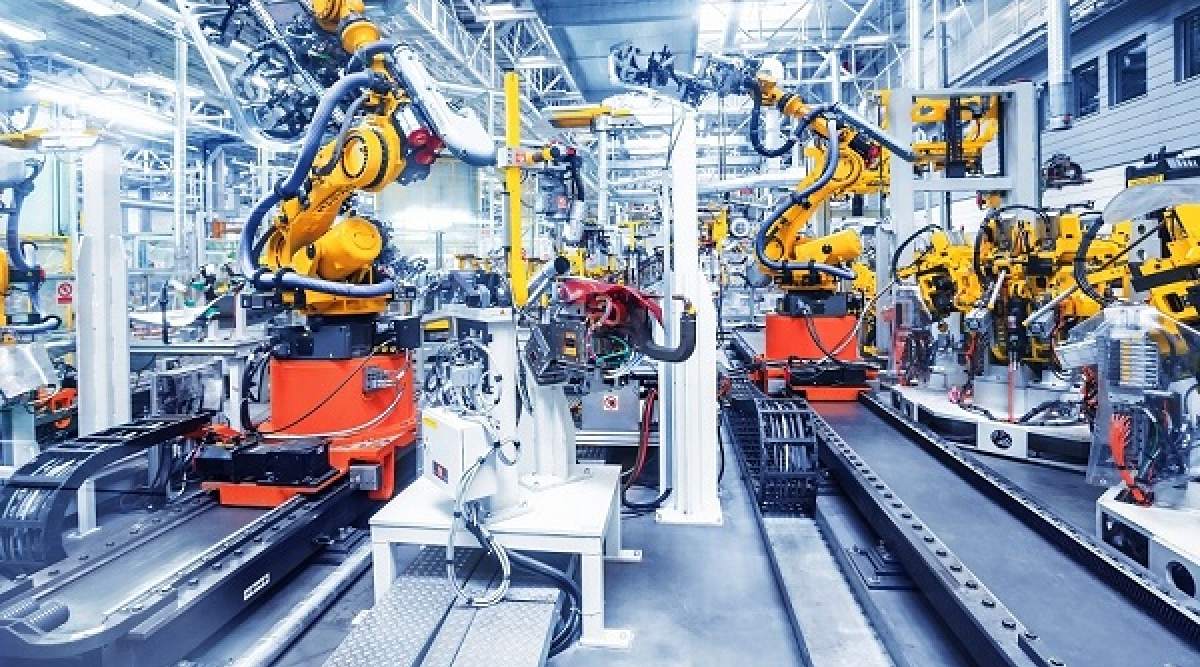
Industrial automation relies heavily on sensors to detect, measure, and monitor physical conditions within machines and processes. Among the many sensing technologies available today, optical sensors have become some of the most versatile and widely adopted devices in manufacturing, packaging, robotics, logistics, and process control applications. Unlike mechanical sensors that require physical contact, optical sensors use light to detect the presence, position, distance, color, shape, or condition of an object. As a result, they offer fast response times, high accuracy, and exceptional reliability in demanding industrial environments. From counting products on a conveyor belt to guiding robotic arms with millimeter-level precision, optical sensors play a critical role in modern automation systems. Furthermore, advances in Industry 4.0, machine vision, and smart manufacturing continue to expand their capabilities and applications. This comprehensive guide explores the different types of optical sensors used in industrial automation, how they work, where they are used, and how to select the right sensor for your application.
Types of Optical Sensors Used in Industrial Automation
Optical sensors detect objects or environmental conditions by transmitting and receiving light. They typically use visible light, infrared light, or laser technology to gather information about a target. These sensors have become essential in modern manufacturing because they offer several advantages:
-
Non-contact operation
-
High-speed detection
-
Long sensing distances
-
Excellent accuracy
-
Minimal mechanical wear
-
Compatibility with automated systems
Industries that commonly use optical sensors include:
-
Automotive manufacturing
-
Food and beverage processing
-
Pharmaceutical production
-
Semiconductor fabrication
-
Packaging and logistics
-
Material handling systems
-
Robotics and machine automation
Before examining each sensor type, it is helpful to understand how optical sensing technology works.
How Optical Sensors Work
Optical sensors operate by emitting a beam of light and analyzing how that light interacts with an object or surface. A typical optical sensor consists of three primary components:
-
Light source
-
Receiver
-
Signal processor
The light source emits a beam toward a target area. When an object interrupts, reflects, absorbs, or alters that light, the receiver detects the change and sends information to the control system. The sensor then converts this optical information into an electrical signal that can be processed by:
-
PLCs
-
SCADA systems
-
Industrial controllers
-
Robotics systems
-
Machine vision platforms
Depending on the sensing principle, optical sensors can detect:
-
Presence or absence
-
Position
-
Distance
-
Movement
-
Color
-
Shape
-
Surface characteristics
Through-Beam Photoelectric Sensors
What Is a Through-Beam Sensor?
Through-beam photoelectric sensors are among the most reliable optical sensors used in industrial automation. In this configuration, the transmitter and receiver are housed separately. The transmitter continuously emits a beam of light toward the receiver. When an object passes between them, it interrupts the beam, causing the sensor to detect the object immediately. Because the receiver constantly monitors a direct light source, through-beam sensors offer exceptional detection reliability.
How Through-Beam Sensors Work
The operating principle is straightforward:
-
The emitter sends a continuous light beam.
-
The receiver detects the beam.
-
An object blocks the beam.
-
The sensor changes its output state.
As a result, the sensor can detect virtually any opaque object regardless of color, texture, or reflectivity.
Advantages of Through-Beam Sensors
Through-beam sensors provide several benefits:
-
Long sensing ranges
-
High detection accuracy
-
Fast response times
-
Excellent reliability in dusty environments
-
Detection of small objects
Common Applications
These sensors are widely used for:
-
Conveyor monitoring
-
Object counting
-
Packaging inspection
-
Pallet detection
-
Automated assembly lines
For example, a bottling plant may use through-beam sensors to count products moving along a conveyor at high speed.
Retro-Reflective Photoelectric Sensors
What Is a Retro-Reflective Sensor?
Retro-reflective sensors place both the emitter and receiver inside the same housing. Instead of using a separate receiver, these sensors rely on a reflector mounted opposite the sensor. The emitted light travels to the reflector and returns to the sensor. When an object interrupts the beam, the sensor detects its presence. This design simplifies installation while maintaining relatively long sensing distances.
How Retro-Reflective Sensors Work
The process involves:
-
Emitting a light beam toward a reflector.
-
Reflecting the beam back to the receiver.
-
Detecting beam interruption when an object enters the sensing path.
Because only one sensor housing is required, installation is easier than with through-beam systems.
Advantages
Key benefits include:
-
Easier alignment
-
Reduced wiring
-
Longer sensing distance than diffuse sensors
-
Reliable object detection
Applications
Common uses include:
-
Warehouse automation
-
Packaging machinery
-
Carton detection
-
Conveyor systems
-
Material handling equipment
Diffuse Photoelectric Sensors
What Is a Diffuse Sensor?
Diffuse photoelectric sensors detect objects by measuring reflected light directly from the target itself. Unlike through-beam and retro-reflective sensors, no separate reflector is required. Instead, the sensor emits light toward an object and measures the amount of light reflected back. When sufficient reflected light returns, the sensor activates.
How Diffuse Sensors Work
The sensing sequence includes:
-
Light emission toward a target.
-
Reflection from the target surface.
-
Detection of reflected light.
-
Signal generation.
Because the object itself acts as the reflector, installation becomes simple and cost-effective.
Advantages
Diffuse sensors offer:
-
Simple installation
-
Compact design
-
Low installation cost
-
Suitable for short-range applications
Limitations
However, performance can vary based on:
-
Object color
-
Surface texture
-
Material reflectivity
-
Ambient lighting conditions
Applications
Typical applications include:
-
Product presence detection
-
Packaging lines
-
Filling machines
-
Automated sorting systems
Laser Sensors
What Are Laser Sensors?
Laser sensors use highly focused laser beams instead of conventional light sources. Because laser beams remain narrow over long distances, they provide exceptional precision and repeatability. Consequently, laser sensors are ideal for applications requiring accurate measurements and positioning.
Types of Laser Sensors
Several laser sensing technologies exist:
Laser Distance Sensors
These sensors measure precise distances between the sensor and a target. Applications include:
-
Thickness measurement
-
Position monitoring
-
Material handling
Laser Displacement Sensors
These sensors detect very small positional changes. Industries use them for:
-
Precision machining
-
Semiconductor manufacturing
-
Quality inspection
Laser Triangulation Sensors
Laser triangulation systems calculate object position using reflected beam angles. They provide highly accurate dimensional measurements.
Advantages
Laser sensors offer:
-
Extremely high precision
-
Long sensing distances
-
Fast response
-
Small spot size
-
Accurate detection of small objects
Applications
Laser sensors are commonly used in:
-
Robotics
-
CNC machinery
-
Automated inspection systems
-
Semiconductor production
-
Electronics manufacturing
Fiber Optic Sensors
What Are Fiber Optic Sensors?
Fiber optic sensors use optical fibers to transmit and receive light between the sensing point and the amplifier unit. Unlike conventional sensors, the sensing head can be extremely small. As a result, fiber optic sensors are ideal for confined spaces where traditional sensors cannot fit.
How Fiber Optic Sensors Work
The system consists of:
-
Optical fiber cable
-
Amplifier
-
Light source
-
Receiver
Light travels through the fiber cable and interacts with the target object. The amplifier processes changes in the returned light signal.
Advantages
Fiber optic sensors provide:
-
Compact sensing heads
-
Resistance to electromagnetic interference
-
High precision
-
Flexible installation
Applications
These sensors are frequently used in:
-
Electronics assembly
-
Semiconductor manufacturing
-
Medical device production
-
Precision automation systems
Color Sensors
What Are Color Sensors?
Color sensors identify and distinguish colors using reflected light. These sensors analyze the wavelength composition of reflected light and compare it to programmed reference values. Consequently, they can determine whether a product matches the desired color specification.
How Color Sensors Work
The sensor:
-
Illuminates the target.
-
Measures reflected wavelengths.
-
Compares readings against stored values.
-
Generates an output signal.
Applications
Color sensors are commonly used for:
-
Packaging verification
-
Label inspection
-
Product sorting
-
Printing quality control
Benefits
Manufacturers use color sensors to improve quality control while reducing inspection errors.
Contrast Sensors
What Are Contrast Sensors?
Contrast sensors detect differences between light and dark areas on a surface. Unlike color sensors, they focus on contrast levels rather than color values. This capability makes them particularly useful in packaging and printing applications.
Applications
Common applications include:
-
Registration mark detection
-
Packaging alignment
-
Label positioning
-
Printing machinery
Advantages
Contrast sensors provide:
-
High-speed detection
-
Accurate mark recognition
-
Reliable performance on fast-moving materials
Machine Vision Sensors
What Are Machine Vision Sensors?
Machine vision sensors represent one of the most advanced forms of optical sensing technology. These systems combine cameras, optics, image processing software, and artificial intelligence to analyze visual information. Rather than detecting simple object presence, machine vision systems evaluate complex product characteristics.
Capabilities
Machine vision systems can perform:
-
Object identification
-
Dimensional inspection
-
Defect detection
-
Barcode reading
-
OCR verification
-
Robotic guidance
Applications
Industries increasingly use machine vision for:
-
Automotive quality inspection
-
Electronics manufacturing
-
Pharmaceutical packaging
-
Food processing
-
Logistics automation
As Industry 4.0 adoption accelerates, machine vision continues to become a core technology within smart factories.
Optical Encoders
What Are Optical Encoders?
Optical encoders measure rotational or linear movement using light-based sensing principles. These devices convert mechanical motion into electrical signals that automation systems can interpret.
Types of Optical Encoders
Incremental Encoders
Incremental encoders generate pulses that indicate movement and speed.
Absolute Encoders
Absolute encoders provide precise positional information even after power loss.
Applications
Optical encoders are widely used in:
-
Servo motor systems
-
Robotics
-
Motion control systems
-
CNC machinery
-
Automated assembly equipment
Their ability to provide precise position feedback makes them essential for modern automation systems.
Choosing the Right Optical Sensor
Selecting the correct optical sensor requires careful consideration of several factors.
Sensing Distance
Some applications require long-range detection, while others demand close-range precision.
Object Characteristics
Consider:
-
Size
-
Shape
-
Color
-
Transparency
-
Reflectivity
Environmental Conditions
Evaluate:
-
Dust levels
-
Moisture exposure
-
Temperature extremes
-
Vibration
Accuracy Requirements
High-precision applications often require laser sensors or machine vision systems.
Integration Requirements
Ensure compatibility with:
-
PLC systems
-
SCADA platforms
-
Industrial Ethernet networks
-
Robotics systems
The Future of Optical Sensors in Industrial Automation
Optical sensing technology continues to evolve rapidly. Several trends are shaping the future of industrial sensing:
Smart Sensors
Modern optical sensors increasingly include onboard processing capabilities and self-diagnostics.
AI-Powered Vision Systems
Artificial intelligence enables machine vision systems to perform advanced inspections with remarkable accuracy.
Industrial IoT Connectivity
Connected sensors provide real-time data for predictive maintenance and process optimization.
Edge Computing
Sensors now process data locally, reducing latency and improving response times. As factories become smarter and more connected, optical sensors will continue to play an increasingly important role in industrial automation.
Recommended Related Articles
Frequently Asked Questions (FAQ)
What are optical sensors in industrial automation?
Optical sensors are electronic devices that use light to detect, measure, or monitor objects and process conditions. They are widely used for object detection, positioning, inspection, and quality control applications.
What is the most common type of optical sensor?
Photoelectric sensors are the most widely used optical sensors in industrial automation. Through-beam, retro-reflective, and diffuse sensors are common variants.
What industries use optical sensors?
Industries including automotive manufacturing, food processing, pharmaceuticals, logistics, semiconductor production, packaging, and robotics rely heavily on optical sensing technologies.
What is the difference between a photoelectric sensor and a laser sensor?
Photoelectric sensors generally detect object presence, while laser sensors provide highly precise measurements of position, distance, and dimensions.
Are optical sensors suitable for harsh industrial environments?
Yes. Many industrial-grade optical sensors are designed to withstand dust, vibration, moisture, and temperature extremes commonly found in manufacturing facilities.
How do machine vision sensors differ from standard optical sensors?
Standard optical sensors detect simple conditions such as object presence or position. Machine vision sensors capture and analyze images, allowing them to perform complex inspection and quality-control tasks.
Can optical sensors integrate with PLC systems?
Yes. Most industrial optical sensors are designed to integrate easily with PLCs, SCADA systems, robotics controllers, and Industrial IoT platforms, making them ideal for modern automation environments.
Your One-Stop Source for Reliable Automation & Process Control Equipment
Access trusted process control equipment, expert support, and fast sourcing—all in one place.
-

AC Drives 18,165 Products
-

Butterfly Valve236 Products
-

Circuit Breakers2,226 Products
-

Contactors567 Products
-

Counters78 Products
-

Encoder117 Products
-

Fanuc Main Board1,376 Products
-
Flow Transmitter (Flow meter)552 Products
-

HMI/Touch Screen592 Products
-

Industrial Device Servers125 Products
-

Inverter911 Products
-

Network/Signal2 Products
-

Others4,502 Products
-

Power Supply218 Products
-

Pressure Transmitter146 Products
-

Programmable Logic Controller (PLC)6,290 Products
-

Relay927 Products
-

Sensor2,221 Products
-

Servo Motors & Motor Drives4,838 Products
-

Switch897 Products
-

Timer93 Products
-

Uncategorized1,141 Products
-

Valve Controller & Manifolds17 Products
-
Variable Frequency Drives (VFD)257 Products
-

Yokogawa Remote Indicators16 Products